Buying the wrong feed pellet machine is a nightmare. I’ve seen farmers waste thousands on equipment that either clogs constantly or produces pellets that crumble into dust, leaving their livestock unfed and their money gone.
For a small farm in Venezuela, a flat die pellet machine is the most practical and affordable choice. For medium to large commercial farms needing high output and uniform pellets, a ring die machine is the superior investment for long-term efficiency.
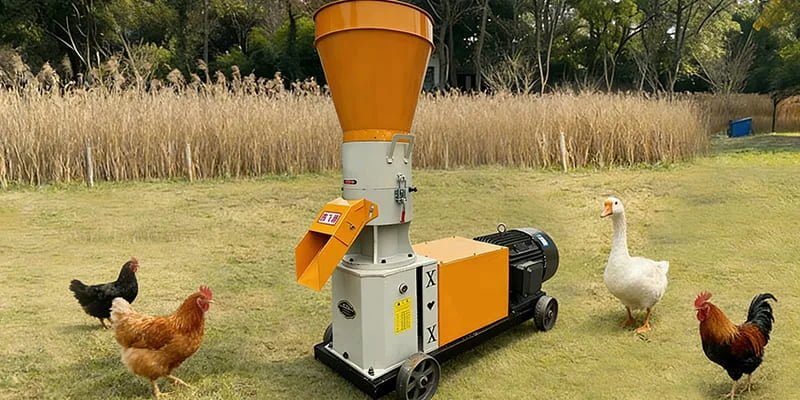
After 16 years in this business, I’ve talked to hundreds of farmers who felt stuck. I remember a man from Guárico who was on the verge of giving up. He was trying to make pellets with local corn cobs, but his machine (bought cheap from another supplier) kept jamming. He was frustrated and losing money. This isn't an unusual story. The key is not to find just any machine, but the right machine for your specific farm. Let's walk through this so you can make a choice with confidence.
Flat Die vs Ring Die Feed Pellet Machine for Venezuela: Which Fits Your Scale?
It's a classic mistake: a small farm buys an oversized industrial machine, or a growing farm gets a unit that's too small. This mismatch is a direct hit to your wallet, either through wasted energy or production bottlenecks.
The rule of thumb is simple: If your production is under 500 kg per hour, a flat die machine is your workhorse. If you need more than that for commercial sales, you need the horsepower and consistency of a ring die machine.
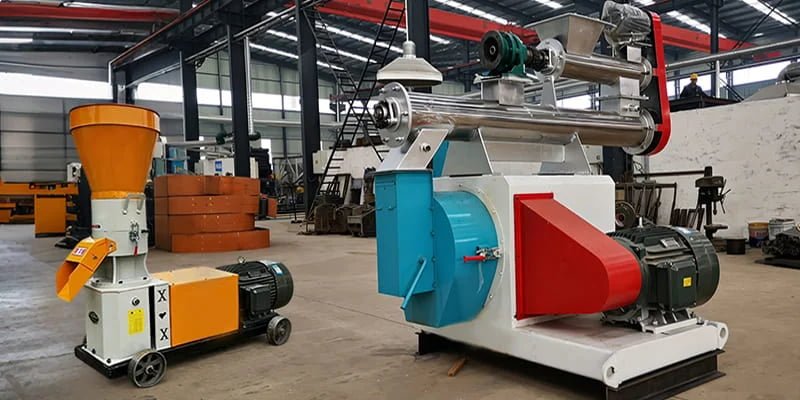
I've learned that a machine's capacity on paper means nothing if it doesn't align with your daily reality. Buying too big is like using a sledgehammer to crack a nut—it's inefficient and expensive. Buying too small means you're constantly running to catch up, a major source of stress and lost opportunity. The goal is a perfect match between your output needs and the machine's capability. Let's look at where each type excels, making the decision clear.
For Family Farms: The Flat Die Advantage
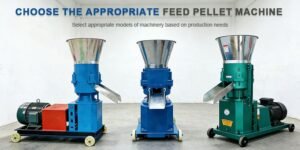
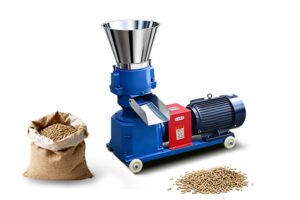
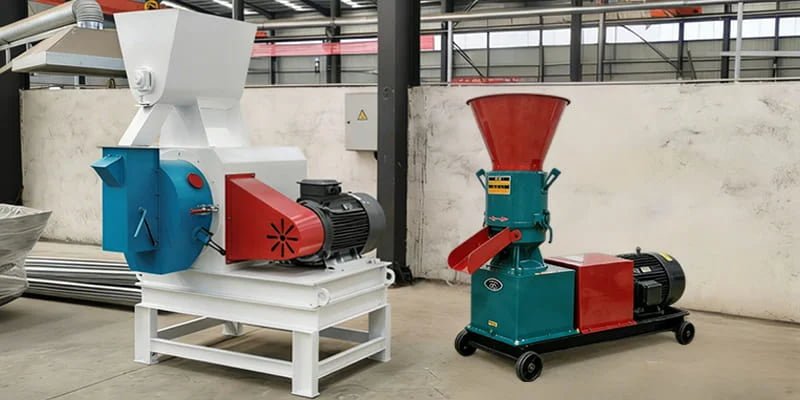
The flat die pellet machine is the backbone of self-sufficient farming. It’s not flashy, but it’s built to be simple and reliable. The initial investment is lower, making it far more accessible when you're starting out. Its mechanical design is straightforward; the rollers are on top, pushing the raw material directly down through the die. This means you can see everything that's happening, making it easy to operate and even easier to maintain yourself. For a family farm needing to produce its own feed, this is the most logical and economical choice.
For Commercial Growth: The Ring Die Powerhouse
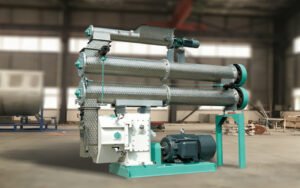
When you start bagging feed to sell or managing a larger herd, you move from needing a tool to needing a system. The ring die machine is a system. It's designed for continuous, high-speed operation. A vertical die rotates around stationary rollers, using centrifugal force to extrude dense, uniform, and durable pellets. This quality is crucial for storage and transport. While it costs more upfront, its speed, energy efficiency, and the longer life of its parts result in a lower cost per ton of feed produced, a key metric for any commercial business.
| Feature | Flat Die Pellet Machine | Ring Die Pellet Machine |
|---|---|---|
| Ideal User | Small & Family Farms | Medium-Sized & Commercial Farms |
| Capacity | 50 - 500 kg/hour | 500 - 3000+ kg/hour |
| Best Use | On-farm feed self-sufficiency | High-volume commercial feed production |
| Maintenance | Simple, DIY-friendly | Requires more technical knowledge |
Does It Work with Venezuelan Sugarcane Bagasse and Corn Cobs?
This is the most critical question. A new machine is worthless if it can't process the ingredients you already have. Many farmers worry that fibrous materials like bagasse will just choke a standard machine.
Yes, the flat die machine excels here. Its design creates intense, direct pressure, which is perfect for compacting tough, fibrous Venezuelan materials like sugarcane bagasse and corn cobs into solid feed pellets, a task where smaller ring die units can falter.
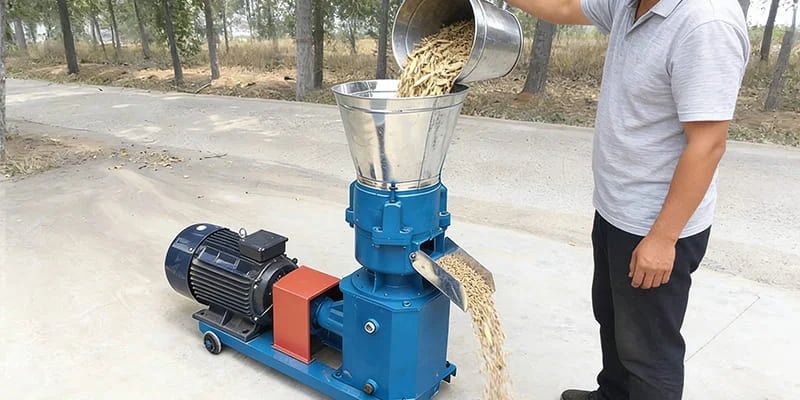
I'll never forget a test we ran for a cooperative. They sent us a bale of sugarcane bagasse, which, frankly, looked more like yard waste than feed. They were skeptical. We fed it directly into one of our flat die models. When dense, perfectly formed pellets started streaming out, they were stunned. It proved my core belief: the machine must be built for the reality of the field, not just for perfect conditions in a lab.
How It Works: Real-World Performance Data
The science behind this is straightforward. In a flat die machine, the rollers apply a direct, heavy downward force. This is incredibly effective at crushing and forcing bulky, low-density materials like sugarcane bagasse or ground corn cobs through the die holes. The intense friction and pressure create the heat needed to bind the particles together naturally. Ring die machines are masters of efficiency with pre-processed grains, but their mechanism can sometimes struggle to properly grip and feed raw, inconsistent fibrous material without extensive pre-grinding and conditioning. Our test data backs this up.
STROSEN Test Results (Venezuelan Raw Materials):
| Raw Material | Machine Type | Pellet Formation Rate | Pellet Density |
|---|---|---|---|
| Sugarcane Bagasse | Flat Die | 94% | High |
| Corn Cobs (Ground) | Flat Die | 92% | High |
| Mixed Grains | Ring Die | >98% | Very High |
| Forage Grasses | Flat Die | 95% | Medium-High |
This shows that for farmers looking to utilize the abundant, low-cost resources available in Venezuela, the flat die machine provides a robust and reliable pathway to quality feed production.
Conclusion
Choose a flat die machine for on-farm use with local materials in Venezuela. Upgrade to a ring die when your business grows to a commercial scale requiring higher output.
FAQ Section
Question: What's the price of a small feed pellet machine for Venezuela farms? Answer: A flat die machine offers a lower initial cost, making it the most affordable and practical choice for small farms. A ring die machine costs more upfront but provides a better long-term return for high-volume commercial operations through superior efficiency.
Question: How difficult is it to get replacement parts in Venezuela? Answer: We understand that downtime costs you money. We ensure easy access to local spare parts for key components like dies and rollers. This minimizes waiting and keeps your feed production running smoothly without relying on slow international shipping.
Question: Will I need a technician to run this feed pellet machine? Answer: No, our flat die machines are designed for user-friendly operation by farmers. We provide a clear, comprehensive operator's manual in Spanish that guides you through setup, daily operation, and basic maintenance tasks with ease.
Inquiry Guidance
Stop worrying about which machine to buy. Let's use my 16 years of experience to find the perfect solution for your farm's unique needs.