Planning to start your own feed plant? This comprehensive guide covers the essential machinery, production process, and expert tips for small-scale animal feed manufacturing in 2026.
Introduction
In today’s competitive farming industry, producing your own animal feed is no longer just a luxury—it is a strategic necessity to reduce costs and ensure nutritional quality. Whether you are raising poultry, cattle, or fish, a well-planned animal feed production line allows you to control the ingredients and significantly boost your farm's ROI.
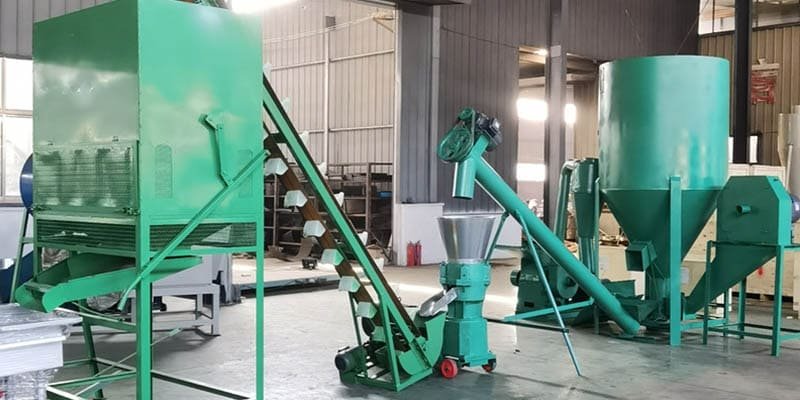
This guide will walk you through the essential stages and the high-efficiency machinery needed to transition from manual feeding to professional manufacturing.
Phase 1: Raw Material Pre-treatment (Grinding)
The first step in high-quality feed production is breaking down raw grains (corn, soybean, wheat) into a uniform powder. This increases the surface area for better digestion and easier mixing.
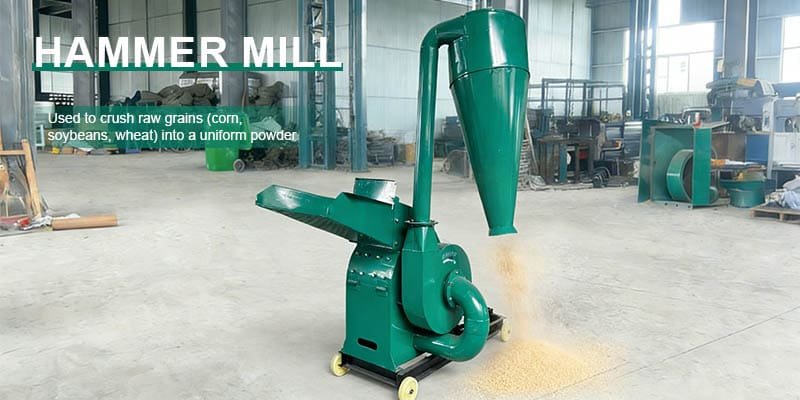
- Why it matters: Inconsistent particle sizes can lead to poor pellet quality and nutrient waste.
- Recommended Equipment: Our ST-HC Series Feed Hammer Mill is engineered for this purpose. Featuring high-speed alloy hammers, it ensures a consistent fineness that is perfect for poultry and livestock feed.
- Pro Tip: Always check the moisture content of your grains before grinding; 12-14% is the "sweet spot" for most materials.
Phase 2: Precise Formulation & Uniform Mixing
Once the materials are ground, they must be blended with additives, vitamins, and minerals. Uniformity is key—if the mixture is not consistent, some animals will get too many nutrients while others get too few.
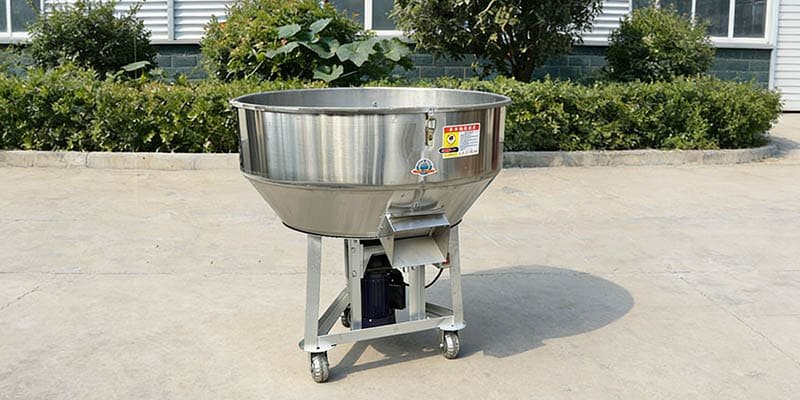
- Recommended Equipment: For small-scale operations, a Vertical Feed Mixer is highly efficient, while a Horizontal Ribbon Mixer is better for larger industrial batches.
- Key Insight: High-precision mixing prevents "nutrient hotspots" and ensures every pellet carries the same nutritional value.
Phase 3: The Heart of Production—Pelletizing
This is where the magic happens. The loose mash is compressed into dense, durable pellets. This process not only makes the feed easier to handle but also heat-treats the ingredients, killing harmful bacteria.
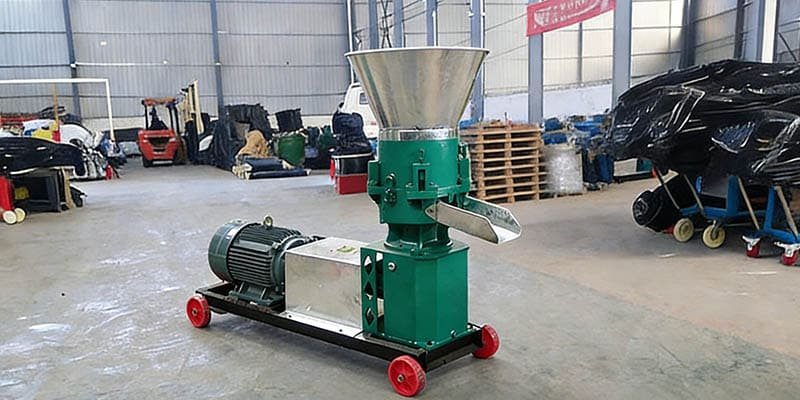
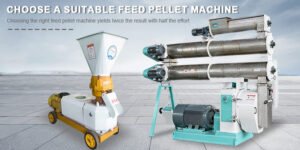
Flat Die vs. Ring Die: Which is right for you?
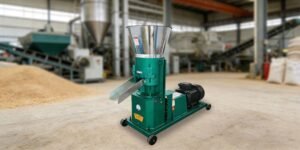
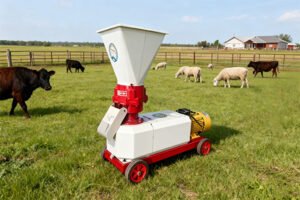
- Flat Die Pellet Mill: Best for small-scale farms. It’s compact, affordable, and easy to maintain. (Check our Flat Die Feed Pellet Machine range).
- Ring Die Pellet Mill: Designed for large-scale, continuous industrial production.
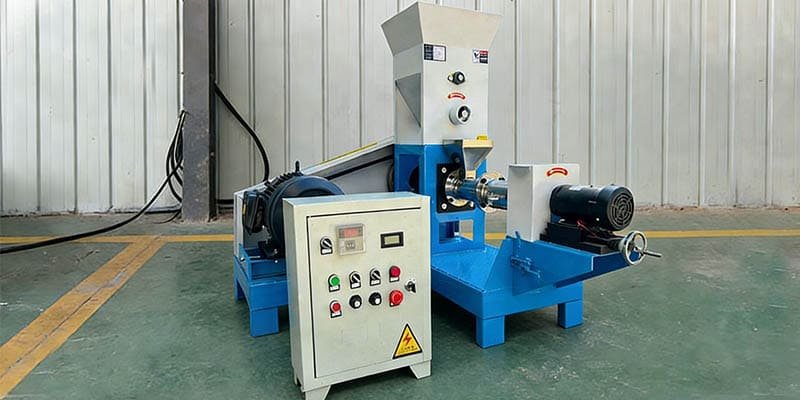
- Aquatic Feed Note: If you are producing fish or shrimp feed, you will need a Floating Fish Feed Extruder to ensure the pellets float on the water surface.
Phase 4: Cooling and Proper Storage
Freshly made pellets come out hot and slightly moist. If you bag them immediately, they will grow mold.
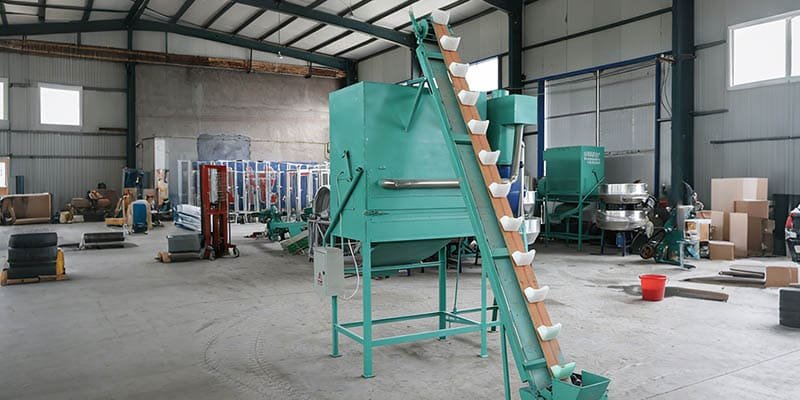
- Cooling: Let the pellets cool down to room temperature.
- Screening: Remove any "fines" (loose dust) to ensure only clean pellets reach your animals.
- Storage: Store in a dry, ventilated area in high-quality bags to maintain freshness for months.
Summary: Why Invest in a Strosen Production Line?
Building a feed plant is an investment in your farm's future. By choosing STROSEN machinery, you benefit from:
- Industrial Durability: Carbon steel bodies and heat-treated alloy parts.
- Energy Efficiency: Optimized motors that reduce electricity costs by up to 15%.
- Expert Support: 24/7 technical guidance from our engineering team.
Frequently Asked Questions (FAQ)
Q: What is the best power source for a small feed plant? A: We provide both electric motor and diesel engine options. Diesel is ideal for remote areas with unstable power grids.
Q: How long do the wear parts (hammers and dies) last? A: With proper maintenance, our high-alloy hammers can last for 800-1000 hours of continuous operation.
Q: Can I make different pellet sizes with one machine? A: Yes! By simply changing the die plate or sieve screen, you can produce pellets ranging from 1.5mm to 8mm.
Ready to build your feed plant?
Contact Strosen Engineers todayfor a free layout design and factory-direct pricing!