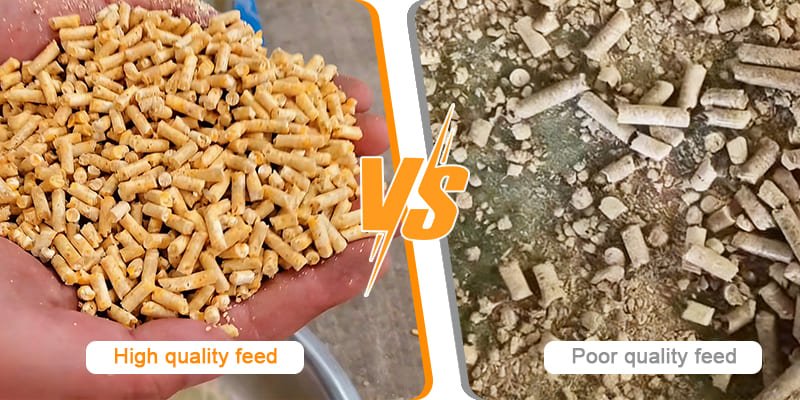
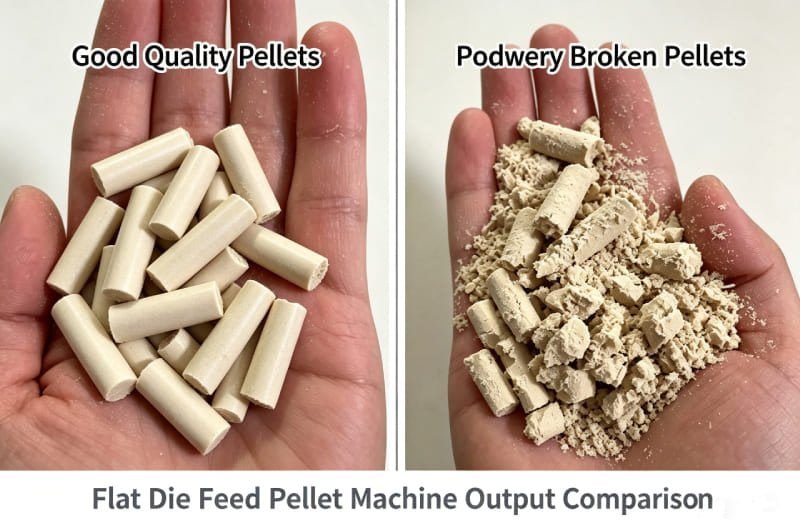
If your flat die feed pellet machine keeps producing excessive powder, incomplete pellets, and rough, non-smooth feed pellets, you are dealing with one of the most common feed pellet machine forming issues for flat die pellet mills. This frustrating problem not only ruins the uniform, smooth appearance of finished feed pellets but also lowers feed palatability, shortens storage life, and reduces overall livestock feeding efficiency.
In this detailed SEO guide, we will analyze the root causes of powdery rough pellets from flat die pellet machines and share practical, step-by-step fixes for both small household flat die pellet equipment and commercial feed pellet processing machines.
1. Core Reasons for Powdery & Rough Pellets
Nearly all flat die pellet machine pellet forming failures that result in powdery and rough pellets stem from four key factors:
- Improper raw material moisture content (the #1 cause)
- Excessive gap between pressure roller and flat die
- Insufficient material curing and adhesion
- Coarse raw material crushing fineness & worn machine parts
2. Wrong Raw Material Moisture (Most Common Cause)
Raw material moisture is the most critical factor affecting flat die pellet machine pellet formation and surface smoothness. The optimal moisture content for flat die feed pelleting is strictly 12%–15% for most livestock feed raw materials.
Low Moisture (Below 11%)
Feed materials with moisture below 11% lack natural viscosity, making it impossible for the flat die pellet machine to compact and bond materials tightly during extrusion. This directly leads to scattered powder, broken pellets, and rough finished pellets that crumble right after exiting the flat die.
High Moisture (Above 17%)
Feed materials with moisture above 17% will turn sticky during pelleting, causing die hole blockages and soft, deformed pellets in your flat die pellet machine. These over-wet pellets will crack and turn into powdery feed after natural cooling.
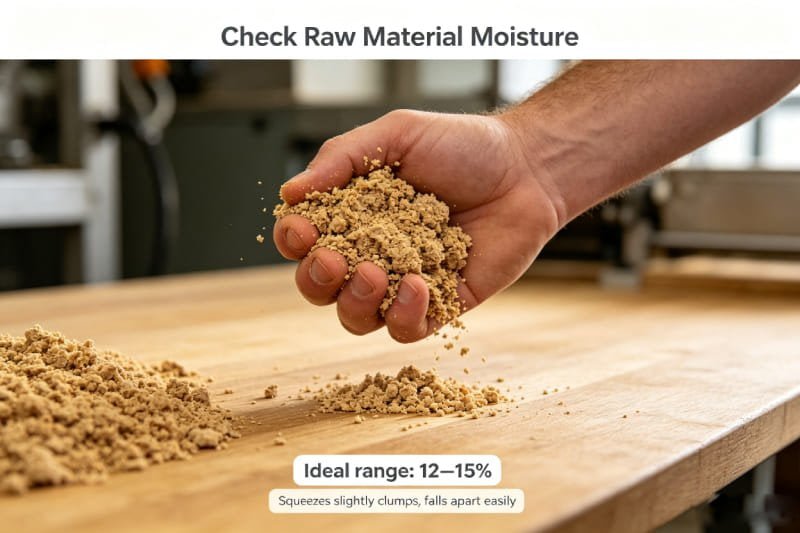
How to Adjust Moisture Correctly
- Spray a small amount of warm water evenly on dry feed materials, or add molasses and animal fat to improve adhesion.
- Standard test: Squeeze the material into a ball with your hand; it holds shape but breaks easily with a light touch (ideal moisture).
- Avoid excessive oil addition (max 1%–2%). Too much grease isolates starch molecules and completely destroys material adhesion.
3. Insufficient Crushing Fineness Leads to Loose Pellets
Overly crushed coarse feed materials cannot be fully compressed by a flat die pellet machine during the extrusion process. Internal gaps will form inside pellets, resulting in loose, unsmooth finished products and excessive powdery residue.
- Corn and soybean meal: Crush with a 2.0–2.5mm sieve
- Straw and forage materials: Crush to 1–3mm fineness
Low-viscosity coarse fiber materials including rice husk, wheat bran, and dry straw cannot form smooth, solid pellets alone on a flat die pellet machine. To fix powdery pellet issues, you must add adhesive materials such as corn flour, fine bran, molasses, or bentonite as natural binders.
4. Incorrect Gap Between Pressure Roller and Flat Die (Flat Die Machine Exclusive)
For all standard flat die feed pellet machines, the ideal gap between the pressure roller and flat die is 0.1–0.3mm (the thickness of a standard A4 paper). This precise gap is the core parameter for stable pellet forming and smooth pellet surfaces.
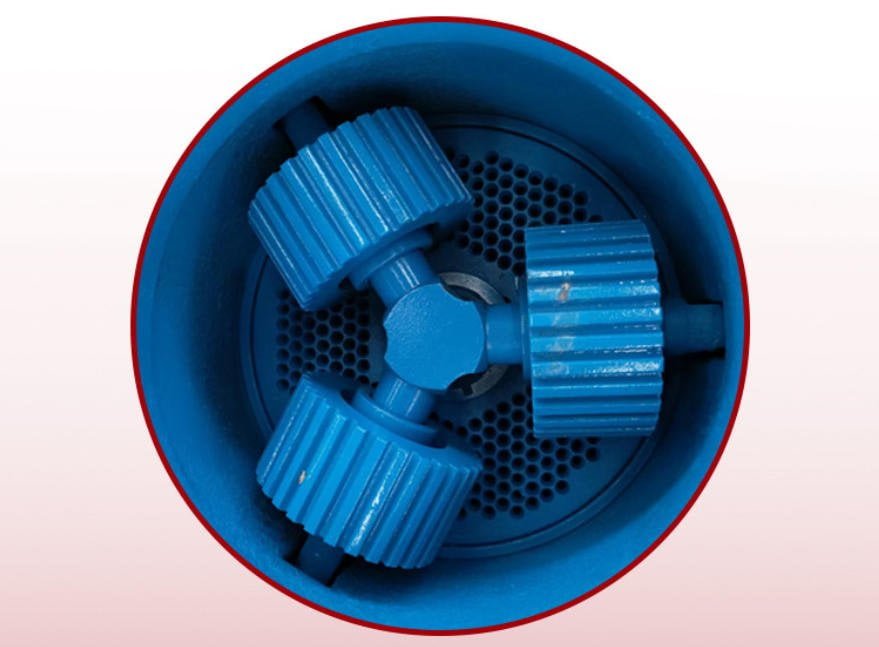
Problems Caused by Wrong Gap
- Too large gap: The pressure roller fails to compact feed materials adequately. Insufficient extrusion pressure from the flat die pellet machine causes massive powder residue and completely unformed feed pellets.
- Too small gap: Severe friction occurs between the roller and die, causing overheating, burnt pellets, and rapid part wear.
Adjustment Method
Loosen the roller locking nut and fine-tune the eccentric bolt to keep all pressure rollers at a uniform standard gap. If pressure roller surfaces lose anti-slip texture or flat die holes are severely worn, simple gap adjustment cannot fix your powdery pellet machine problem — you need to replace worn rollers or flat die components directly.
5. Worn or Blocked Flat Die (Critical Component Failure)
The flat die is the core molding component of a flat die feed pellet machine. Worn, clogged, or damaged flat dies are one of the most overlooked causes of persistent powdery and rough pellets.
- Worn die holes: Polished inner die walls lose friction. Feed materials slide through the die instead of being tightly compacted by the flat die pellet machine, producing loose, powdery pellets with rough surfaces.
- Clogged & coked die holes: Residual feed carbonizes inside holes, blocking discharging and causing incomplete pellet forming and breakage.
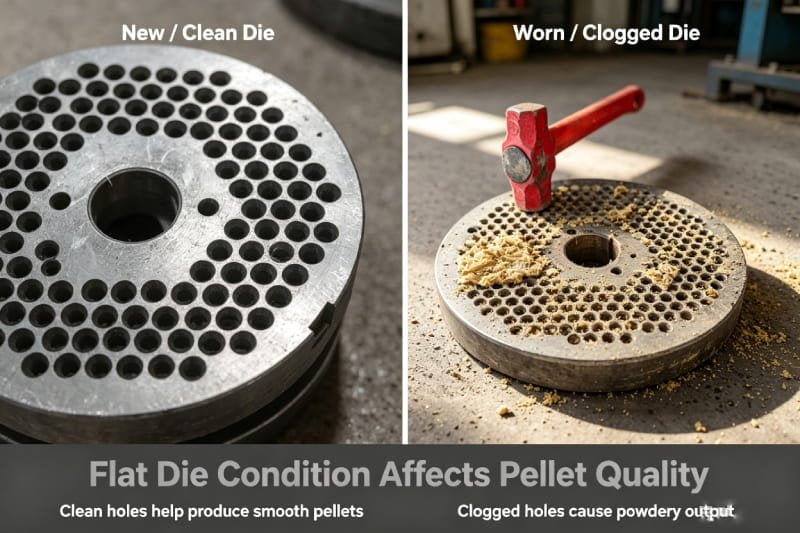
Solutions
- Light blockage: Soak the flat die in oil and clean die holes with a steel brush before operation.
- Severe wear or lost taper: Replace with a new flat die (new dies have tapered inlet holes for smooth extrusion and glossy pellets).
6. Poor Material Curing & Tempering Effect
Smooth, dense, and glossy feed pellets depend on full starch gelatinization and material curing. Running a flat die pellet machine with dry, uncured materials always results in rough, fragile, powdery pellets with poor molding effects.
- Steam-type commercial machines: Keep steam pressure at 0.2–0.4MPa and temper materials for 30–60 seconds to fully gelatinize starch and enhance adhesion.
- Small household pellet mills: Mix materials with 3%–5% warm water and let them stand for 10 minutes for pre-curing before pelleting.
7. Machine Operating & Formula Issues
- Low host speed: Operating the flat die pellet machine below rated speed reduces extrusion pressure, leading to incomplete pellet forming and abundant powder.
- Uneven feeding: Intermittent and unstable feeding causes fluctuating extrusion pressure in the flat die pellet machine, creating a mix of unformed powder and broken pellets.
- High crude fiber ratio: If straw/peanut vine content exceeds 40%, add bentonite or lignin binder to improve forming performance.
- Insufficient cooling: Hot fresh pellets look complete but crack and turn to powder after cooling down.
8. Fast Step-by-Step Troubleshooting Checklist
Follow this order to fix powdery pellet problems quickly:
- Adjust raw material moisture to the standard 12%–15%.
- Re-crush coarse feed materials to standard fineness.
- Calibrate the roller and flat die gap to 0.2mm.
- Clean clogged die holes or replace worn flat dies.
- Reduce grease content and add high-viscosity materials (corn flour, molasses).
- Optimize tempering time and temperature for better curing.
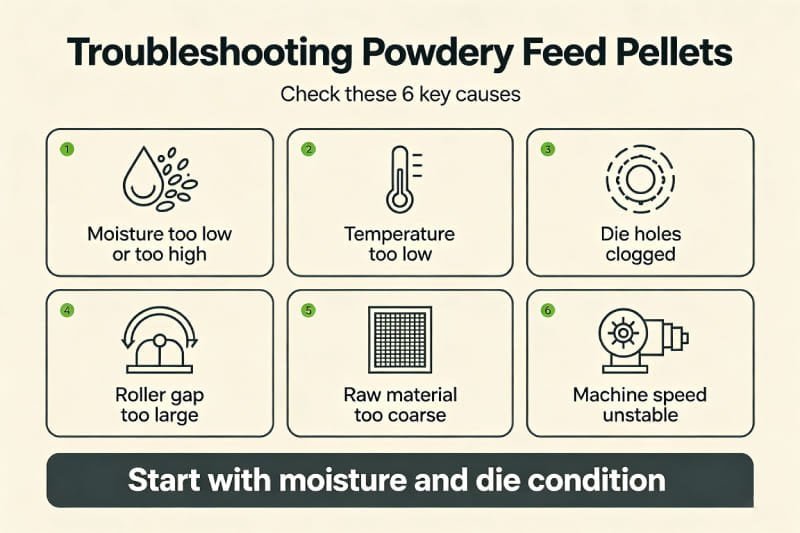
9. Emergency Formula Fix for Powdery Pellets
If you need an immediate improvement, add the following to your existing feed formula: 5% corn flour + 2% molasses + 1% bentonite Adjust moisture to 12%–15% before pelleting. This formula greatly improves material adhesion, making pellets compact, smooth, and less powdery instantly.
Final Thoughts
Powdery, broken, and non-smooth pellets from your flat die feed pellet machine are almost always caused by improper moisture levels, incorrect roller-die gaps, coarse raw materials, or worn machine parts. Following this systematic troubleshooting guide will fully resolve loose powdery pellet issues and help you produce high-density, glossy, uniform feed pellets consistently.
FAQs
Why are my feed pellets breaking into powder after cooling?
The main causes are insufficient feed moisture, incomplete material curing, or excessive crude fiber in your formula. Adjust moisture to the ideal pelleting range and add binders to boost pellet compactness and stop your flat die pellet machine from producing powdery pellets after cooling.
Can a worn flat die cause powdery pellets?
Yes, severely worn flat die holes lose essential friction for extrusion. The flat die pellet machine cannot compact materials firmly, directly causing unformed, powdery, and rough feed pellets.
What is the best moisture for flat die pellet making?
12% to 15% is the ideal moisture range for all common animal feed raw materials.