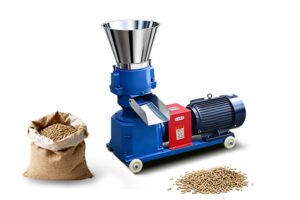
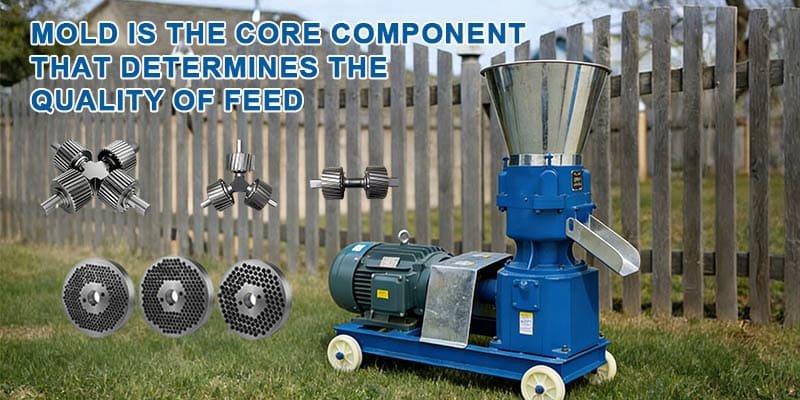
For any owner of a small flat die pellet mill, the die is more than just a wearable part; it is the core component that determines your feed quality. If you are experiencing issues like "no output" or "loose pellets," the problem often stems from using the wrong die.
To choose the right die, you must match its hole diameter to your animal type and its compression ratio to your raw ingredients. Selecting the correct specifications is the key to improving output and reducing your operational costs.
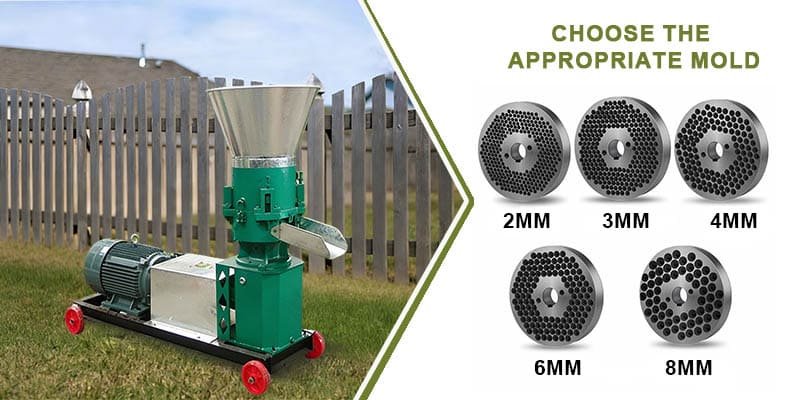
The flat die is the heart of your feed production. Many common frustrating issues, from machine blockages to poor pellet durability, can be traced directly back to an incorrectly selected die. This comprehensive guide will explain exactly how to select the perfect die based on your specific animals and raw materials. By the end, you will be able to choose accessories with confidence, boosting your production efficiency and feed quality.
Core Specifications: What Hole Size Should You Choose For Different Animals?
Are your pellets too large for your young animals to eat, or so small that your adult livestock aren't eating efficiently? The pellet's physical size is the first critical factor for feed acceptance and digestibility.
Select a die with a small hole diameter (2.0-2.5mm) for young animals. Use a medium size (3.0-4.0mm) for growing animals like rabbits and geese, and a larger size (5.0-6.0mm) for mature livestock such as pigs, cattle, and sheep.
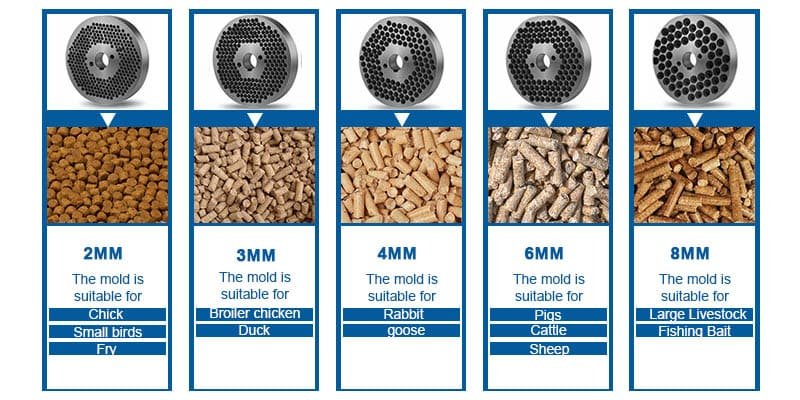
The diameter of the holes in your die directly determines the final size of your feed pellets. This is not a one-size-fits-all decision; it must be tailored to the species and age of your animals to ensure optimal consumption and digestion. Smaller pellets are essential for young animals with delicate digestive systems, while larger pellets can increase the feeding efficiency of adult livestock. Choosing the correct size also minimizes waste from pellets that are either rejected or crumble into dust. The table below provides the professional standard for selecting the right hole diameter.
Recommended Die Diameters by Animal Type
| Animal Type | Recommended Diameter | Reason for Selection |
|---|---|---|
| Chicks, Small Birds, Fish Fry | 2.0mm - 2.5mm | Young animals have a narrow esophagus; small pellets are easier to ingest and digest. |
| Broilers, Rabbits, Geese | 3.0mm - 4.0mm | A moderate size and hardness increase chewing and reduce powdery feed waste. |
| Pigs, Cattle, Sheep, Adult Poultry | 5.0mm - 6.0mm | Larger diameter allows for faster output and improves feeding efficiency for adult livestock. |
| Large Livestock, Fishing Bait | 8.0mm and above | For specialized large-format pellets or bait production. |
Advanced Insight: What Is "Compression Ratio" and Why Does It Matter?
Have you ever searched for pellet machine parts and come across the term "compression ratio"? This technical term is often the secret behind why some feed formulas pellet perfectly while others fail completely.
The compression ratio is the die hole's effective length divided by its diameter. A high ratio is needed for high-fiber ingredients like straw, while a low ratio is best for starchy ingredients like corn to prevent blockages.
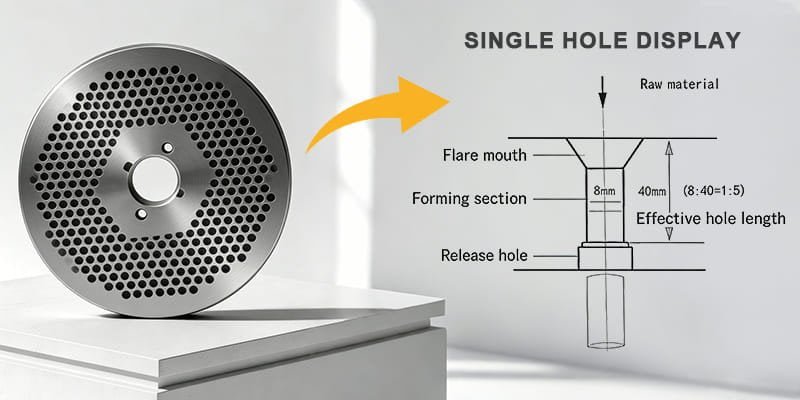
The compression ratio determines how much pressure and friction are applied to your raw materials as they pass through the die.
- High Compression Ratio: These dies have longer holes relative to their diameter. This is ideal for light, fluffy, high-fiber materials like grass meal or straw. The extra time under pressure forces the loose fibers to bind tightly.
- Low Compression Ratio: These dies have shorter holes. They are perfect for dense, oily, or starchy raw materials like corn and soybean meal, which are naturally easier to bind. Too much pressure can cause starch to gelatinize, leading to clogs.
When purchasing a new die, it's crucial to inform your supplier of your exact feed ingredients. They can then recommend or customize a die with the optimal compression ratio, ensuring smooth production and high-quality pellets.
Material Selection: How Do You Extend Your Die's Service Life?
Is the cost of frequently replacing your pellet mill dies cutting into your profits? The material your die is made from directly impacts its durability, longevity, and your long-term operational costs.
For durability and cost-effectiveness, an alloy steel die is the best choice for most small flat die mills. For feed with corrosive additives or high moisture, choose a stainless steel die for its superior rust resistance.
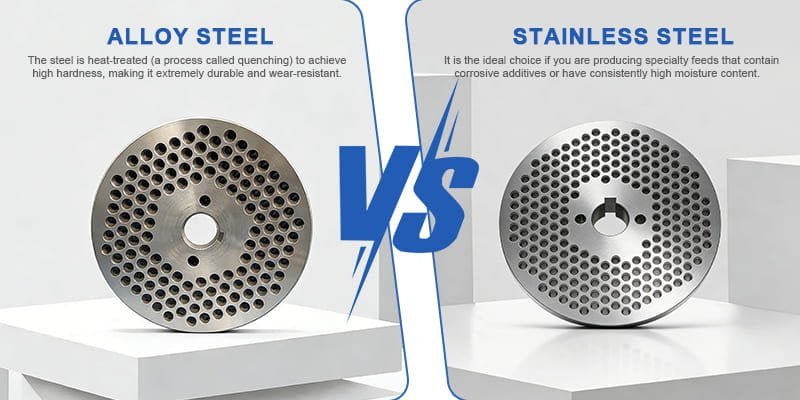
Your die must withstand intense pressure and abrasion, so material hardness and quality are paramount.
- Alloy Steel: This is the mainstream choice for small-scale pellet production. The steel is heat-treated (a process called quenching) to achieve high hardness, making it extremely durable and wear-resistant. It offers the best overall value.
- Stainless Steel: While more expensive, stainless steel provides excellent protection against rust. It is the ideal choice if you are producing specialty feeds that contain corrosive additives or have consistently high moisture content.
Pro Tip: Before its first use, a new die must be "broken in." We recommend running a mixture of waste oil, sand, and sawdust through the machine repeatedly. This process polishes the inside of the die holes, removing any burrs and ensuring smooth output during official production.
Frequently Asked Questions (FAQ)
Q: Why is my new pellet die not producing any pellets?
A: This is a common issue caused by an oxide layer or metallic burrs inside the new die holes. It needs to be broken in as described above. Also, double-check that your raw material moisture content is between 12%-15%.
Q: Can I use both sides of the flat die?
A: Yes. Most flat dies are designed to be double-sided. When one side becomes worn, you can simply flip it over and use the other side. This simple action will instantly double the service life of your consumable part.
Q: How do I know when my die needs to be replaced?
A: It's time for a replacement when you notice a significant drop in pellet formation rate (i.e., more powder in the output), a sharp decline in overall output, and these issues persist even after adjusting the roller gap.
Conclusion
Selecting the right feed pellet mill die will not only improve your feed conversion ratio (FCR) but also protect your machine's motor from overload. It is a critical investment in your farm's efficiency.
If you are unsure which compression ratio is right for your materials, feel free to contact our technical team for a professional consultation.