Your hens are eating plenty of feed, but you're still getting soft-shelled eggs1 and a low daily count. You're spending a fortune on feed with disappointing results and can't figure out why.
Pelleted feed2 improves egg production by preventing picky eating. Every pellet contains a complete, balanced formula, ensuring hens consume enough calcium and phosphorus3 for strong shells and consistent laying. This eliminates nutritional gaps4 caused by hens selectively eating from loose mash.
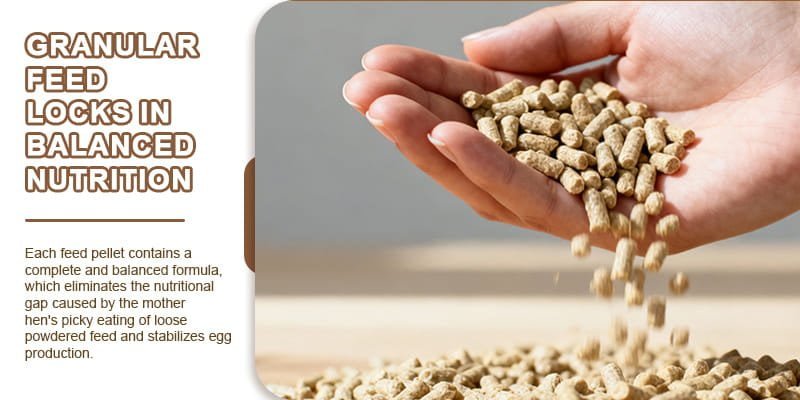
I once worked with a farmer who was at his wit's end. He was mixing a high-calcium mash for his layers, but a quarter of his eggs were soft-shelled and unusable. He was convinced his formula was wrong. I looked at his feeders and saw the problem immediately. They were full of fine, calcium-rich dust that the hens refused to eat. They were only picking out the larger, tastier bits of corn. They were essentially eating an unbalanced diet by choice. We switched his operation to a pelleted feed, and within two weeks, the soft-shell problem vanished. His story proves that it doesn't matter how good your recipe is if the hens don't actually eat all of it.
What is "selective feeding5" and why does it ruin egg quality6?
Your feed bill7 is high, but your egg baskets are not full. Your hens seem to be eating, but they are clearly not getting what they need to produce strong, quality eggs.
Selective feeding is when chickens eat only their favorite parts of a loose feed mix, like corn, and ignore the vital but less tasty mineral powders. This leads to severe calcium and phosphorus3 deficiencies, causing weak bones and soft-shelled eggs1.
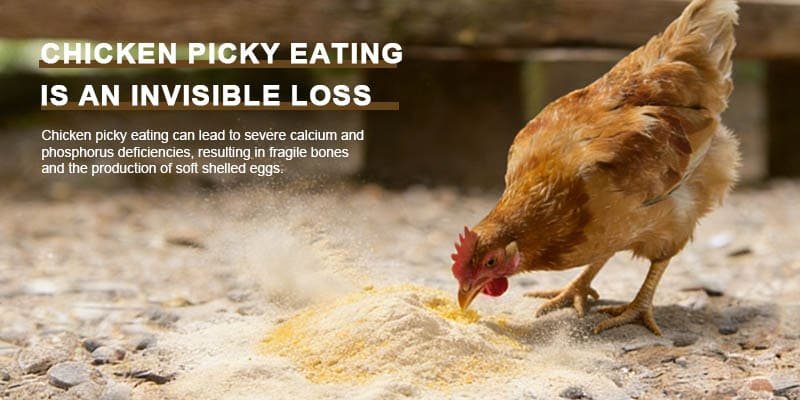
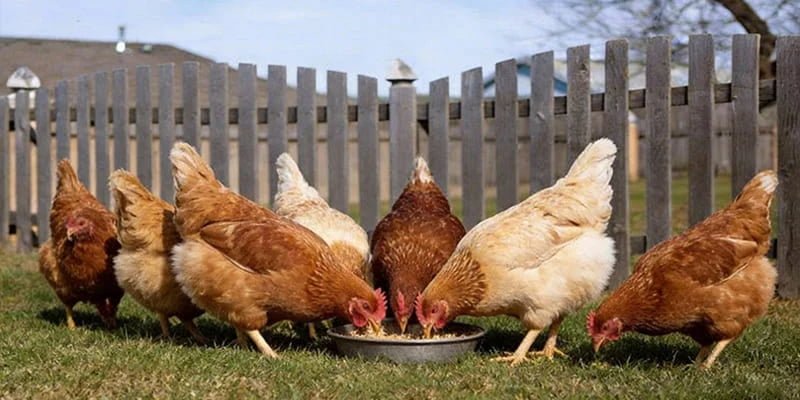
Imagine giving a child a plate with a piece of cake and some broccoli. Most will eat the cake and leave the broccoli. Chickens do the same thing with loose mash feed. The ground corn and soy are tasty, but the fine, powdery limestone (calcium) and phosphorus supplements aren't. Hens will use their beaks to flick away the powder to get to the good stuff. This means they are filling up on energy but starving their bodies of the two most critical minerals for eggshell formation. An eggshell is almost 95% calcium carbonate. Without a consistent, daily supply of calcium, the hen's body simply cannot form a strong shell. This is the number one cause of soft-shelled or shell-less eggs, a problem that directly costs you money.
Feed Form and Its Impact on Nutrient Intake
| Feed Type | Hen's Eating Behavior | Nutritional Outcome | Egg Quality Result |
|---|---|---|---|
| Loose Mash | Picks out tasty grains, leaves dust | Unbalanced diet, low calcium | High risk of soft shells |
| Pellets | Eats the whole uniform piece | Complete, balanced nutrition8 | Strong shells, consistent eggs |
How do pellets guarantee a balanced diet in every single bite?
You know your hens need a balanced diet, but you can't force them to eat the powdery minerals in the mash. You feel helpless, watching potential profits turn into wasted feed dust.
Pellets solve this by grinding all ingredients into a fine powder and then using pressure to lock them into a single, uniform piece. Every pellet is a nutritionally complete meal, making it impossible for a hen to eat selectively.
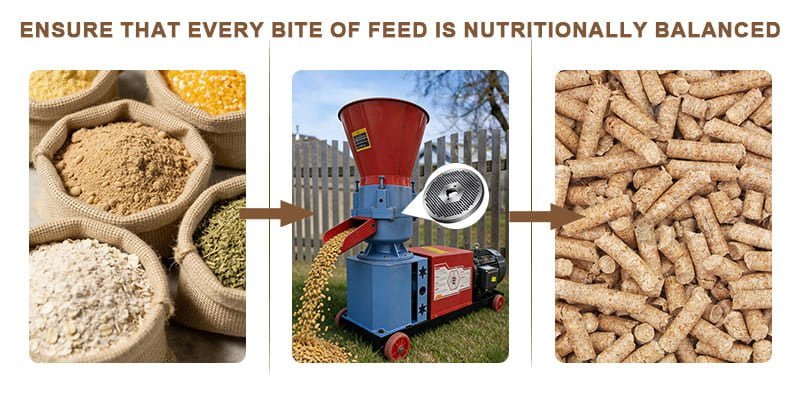
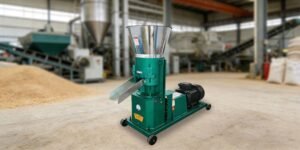
The beauty of a pellet is its simplicity. During production in a machine like our ST-200, all the ingredients—the energy-rich corn, the protein-rich soy, and the vital calcium and premix—are first ground and mixed together thoroughly. Then, this complete mash is forced through a die under immense pressure. This process binds every single nutrient into a dense, solid pellet. When a hen takes a bite, she gets everything in the correct ratio. There is no opportunity for her to pick out the corn and leave the calcium. She gets the whole balanced meal, every time. This ensures that not just a few hens, but every single hen in your flock, receives the exact nutrition you designed for them. This flock-wide consistency is the secret to moving from a few good eggs to consistently high production rates.
Why is pellet hardness9 so important for laying hens?
You invested in a cheap pellet machine, but the pellets crumble into dust in the feeder. You're right back where you started, with wasted feed and poor egg production.
Hard, durable pellets are crucial to prevent crumbling and waste. Machines like the ST-210 provide stable pressure to create dense pellets that survive transport and feeder agitation, forcing hens to consume the whole piece and maximizing your feed investment.
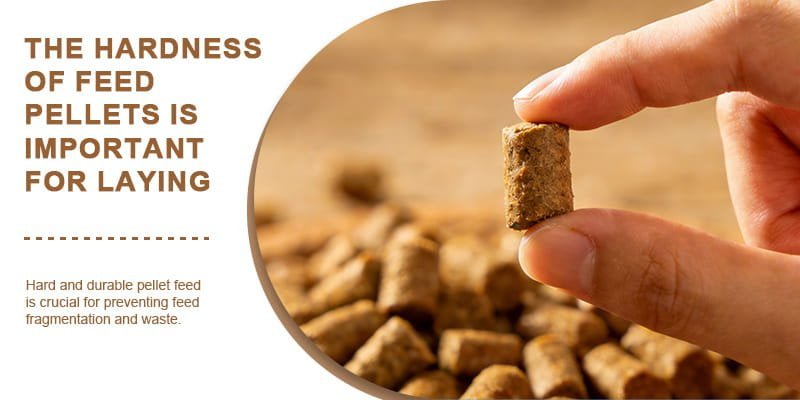
Making a pellet is one thing; making a good pellet is another. The goal is to create a pellet that is hard enough to withstand bagging, transport, and the constant jostling in a feeder, but still easy for the hen to eat. If pellets are too soft, they just break apart and turn back into the same dusty mash you were trying to avoid. All your work becomes pointless. The key to durable pellets is the quality of the pellet machine. Our ST-200 and ST-210 models are built with heavy-duty rollers and a robust power train that delivers consistent, high pressure. This intense pressure creates very dense, hard pellets that don't easily crumble. This hardness means less feed is wasted as dust on the floor, and it ensures that when a hen pecks, she gets the whole pellet, not just a broken piece. This small detail of pellet quality has a huge impact on your feed efficiency10 and, ultimately, your profitability.
Conclusion
Switching from loose mash to hard, uniform pellets is the most effective way to combat picky eating, ensure proper calcium intake, and significantly boost your daily egg production and quality.
Ready to stop wasting feed and start producing better eggs?
Don't let selective feeding5 steal your profits another day. Check our Layer Feed Formulation Chart and see how a STROSEN feed making machine for poultry can transform your production. Let's get every hen the nutrition she needs.
Find out the reasons behind soft-shelled eggs and how to prevent them effectively. ↩
Explore how pelleted feed can enhance egg production by ensuring hens receive balanced nutrition. ↩
Discover the critical role of calcium and phosphorus in producing strong eggshells. ↩
Discover how to prevent nutritional gaps that can lead to poor egg production. ↩
Learn about selective feeding and its detrimental effects on egg quality and hen health. ↩
Explore the various factors that impact egg quality and how to improve it. ↩
Explore strategies to lower feed costs while enhancing egg production efficiency. ↩
Understand the importance of balanced nutrition for optimal egg production in hens. ↩
Learn why the hardness of pellets is crucial for preventing waste and ensuring hens eat properly. ↩
Learn effective methods to enhance feed efficiency and boost profitability. ↩