You spend a lot of money on high-quality feed, but your chickens' growth is slow and egg production is down. Could the size of the pellet be the real problem?
Yes, pellet size1 is critical. Broiler chicks need 2-3mm crumbles for a strong start, while adult layers2 require 4-6mm pellets3 to optimize energy intake4 for egg-laying. Using the wrong size wastes feed, hinders growth, and hurts your farm's profitability.
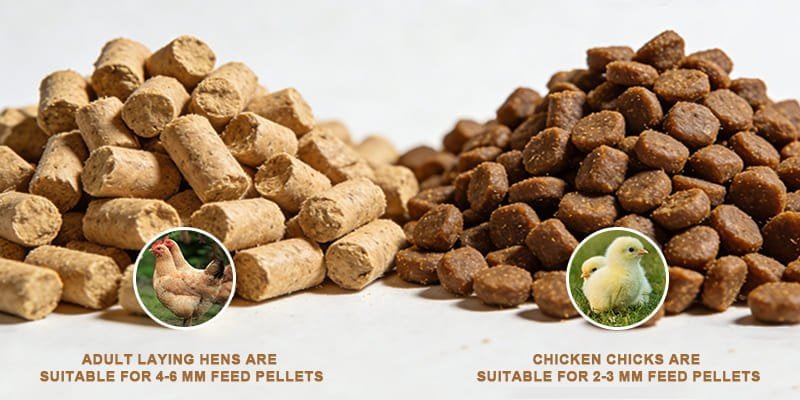
I'll never forget a new farmer who called me, totally confused. He was using the same expensive feed for his new chicks and his adult laying hens, but neither group was thriving. He assumed all chickens could eat the same thing. This is a common mistake. We quickly figured out the issue wasn't the feed's nutrition, but its form factor. The pellets were too big for the chicks to eat properly, and too small for the layers, causing them to waste energy. This taught me a valuable lesson: for chickens, the size of their dinner plate matters just as much as what's on it.
Why do young chicks need special crumbles instead of just small pellets?
You see your new chicks pecking around their feeder, but they seem to be just pushing the food around. They aren't gaining weight, and you're worried they're not eating enough.
Chicks need 2-3mm crumbles because their beaks are tiny and their digestive systems are still developing. Standard pellets are too large and hard for them to swallow, leading to selective feeding5, malnutrition, and a poor start in life.
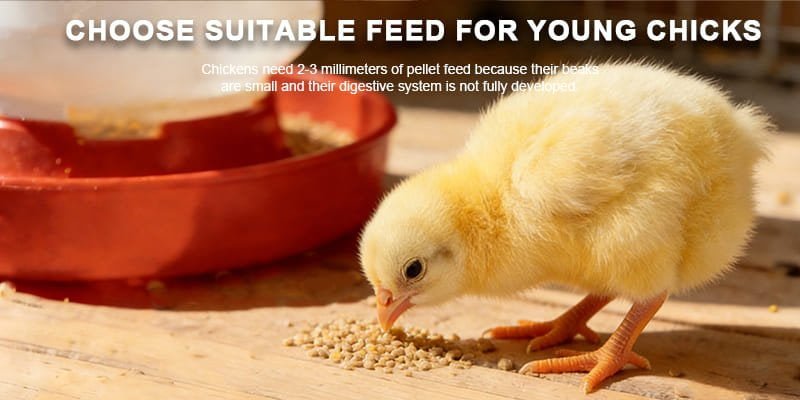
Think about a baby chick. Its beak is incredibly small and delicate. Trying to eat a 4mm pellet is like a human trying to swallow a golf ball. They simply can't do it. Instead, they will "selectively feed"—pecking at the smaller, broken bits and ignoring the larger, more nutrient-dense pieces. This leads to an unbalanced diet right from day one. Crumbles are just pellets that have been lightly cracked into the perfect, bite-sized pieces. This ensures every mouthful contains a complete nutritional profile6. As a manufacturer, we know that the first two weeks of a broiler's life determines its final weight. Providing proper 2.5mm crumbles, which you can make with the right die on an ST-125 machine, directly improves their Feed Conversion Ratio (FCR)7 and sets them up for profitable growth.
Crumbles vs. Pellets for Chicks
| Feature | 2-3mm Crumbles (Correct) | 4-6mm Pellets (Incorrect) |
|---|---|---|
| Eatability | Easy for small beaks to consume | Too large and hard to swallow |
| Nutrition | Balanced intake in every bite | Leads to selective feeding5 & malnutrition |
| Waste | Minimal | High due to pecking and spillage |
| Growth Impact | Promotes strong, uniform growth | Stunted and uneven growth in flock |
How does pellet size1 impact an adult layer hen’s egg production?
Your adult hens seem healthy, but you're collecting fewer eggs than you expected. You know they're eating, but the results just aren't there, costing you money every single day.
Adult layers need larger 4-6mm pellets3 to reduce feed spillage and ensure they get enough energy for egg production with each peck. Small pellets force them to waste energy eating, which directly detracts from the energy needed to form eggs.
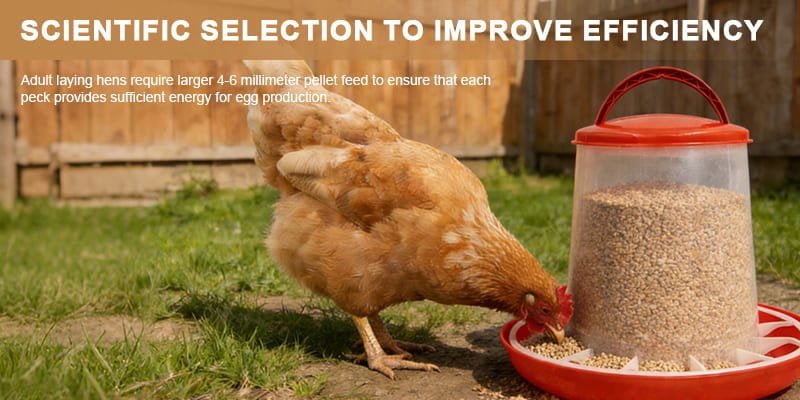
An adult hen's daily routine is all about energy conversion. She takes in energy from feed and turns it into body maintenance and, most importantly, eggs. If her pellets are too small (like chick crumbles), she has to spend far more time and energy pecking to get the same amount of food. This is inefficient. She will flick her beak more to sort the feed, spilling a lot onto the ground where it is wasted. A proper 4mm or even 5mm pellet provides a satisfying mouthful. The hen consumes the energy she needs faster and with less effort. That "saved" energy can then be redirected to what matters most: producing strong, consistent eggs. It's a simple change that can have a direct, positive impact on your daily egg count and your bottom line.
How can I easily make different pellet size1s with one machine?
You understand the need for different sizes, but buying multiple types of commercial feed is complex and expensive. You want a simple, cost-effective way to control your feed production in-house.
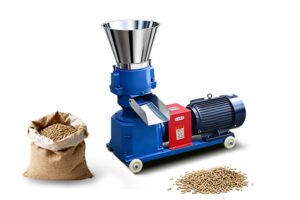
You can easily make different pellet size1s by swapping out one simple part on your pellet machine8: the die. Our ST-125 and ST-150 models use interchangeable dies with different hole diameters to produce any size you need.
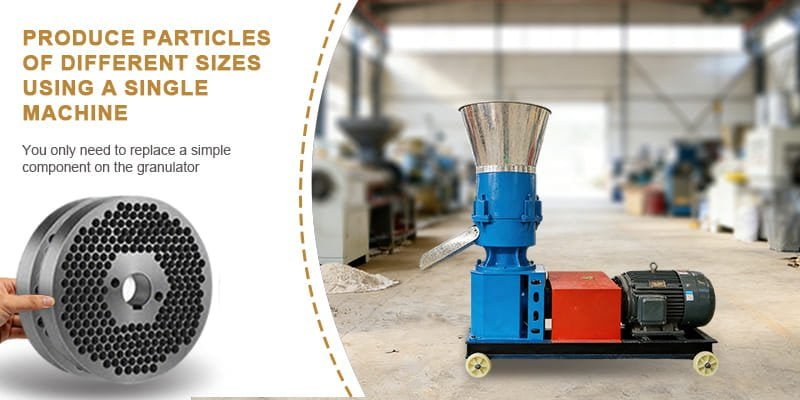
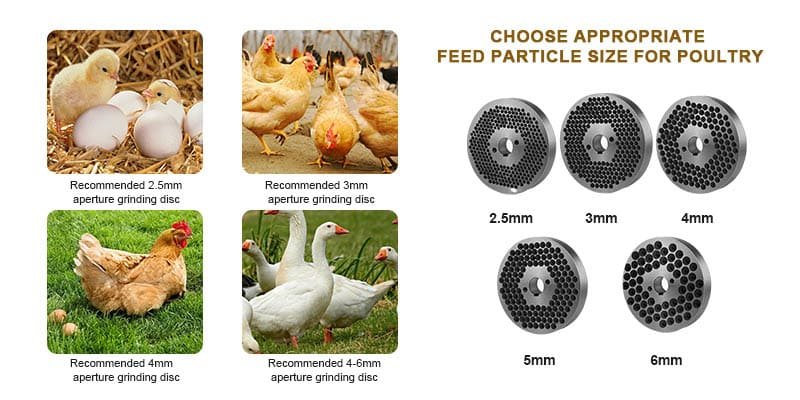
The secret to controlling pellet size1 is the pellet die. This is a heavy, steel disc with precision-drilled holes in it. Your raw material is forced through these holes to create the pellets. The diameter of the holes determines the diameter of your final pellets. Changing from making chick feed to layer feed is as simple as unbolting the roller assembly, swapping the 2.5mm die for a 4mm die, and re-securing it. The whole process takes just minutes. This single feature puts you in complete control of your feeding program. You can make starter crumbles for one week, then switch to producing grower pellets the next, all with one machine. This flexibility not only saves you money but also ensures your animals get the perfectly optimized feed for every stage of their lives.
Quick Guide: Pellet Die Size for Poultry
| Animal / Age | Recommended Die Hole Size | Final Pellet Size |
|---|---|---|
| Chicks (0-4 weeks) | 2.5 mm | ~2-3 mm Crumbles |
| Broilers (Grower) | 3.0 mm | ~3 mm Pellets |
| Layers / Broilers (Finisher) | 4.0 mm | ~4 mm Pellets |
| Ducks / Geese | 4.0 - 6.0 mm | ~4-6 mm Pellets |
Conclusion
Matching pellet size1 to your chicken's age and type is not a small detail; it's fundamental. Taking control with the right machine and die improves animal health and boosts your farm's profit.
Understanding pellet size can significantly impact your poultry's growth and egg production. ↩
Discover the link between feed type and egg production efficiency for adult layers. ↩
Find out how the right pellet size can enhance egg production in adult hens. ↩
Explore the relationship between energy intake and egg production for better results. ↩
Learn about selective feeding and its impact on poultry nutrition and health. ↩
A balanced nutritional profile is crucial for the health and productivity of your poultry. ↩
Understanding FCR can help you improve feed efficiency and profitability on your farm. ↩
Choosing the right pellet machine is vital for optimizing your feed production process. ↩