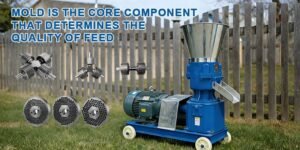
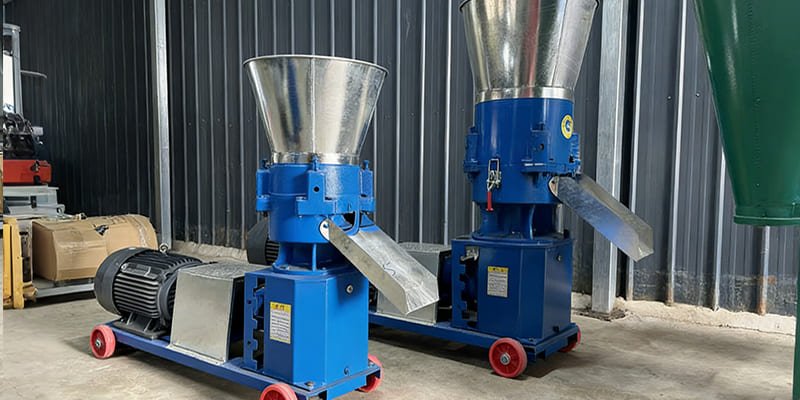
Facing pellet machine issues that halt production and waste money? These frustrating problems are common but often have surprisingly simple fixes you can apply yourself.
Common pellet machine problems include low/no output, excessive powder, rough pellets, strange noises, and sudden stops. These issues typically stem from incorrect material moisture, worn components like the die or rollers, or improper machine settings.
These problems can be incredibly frustrating when you're on a tight schedule. But the good news is, they usually have clear causes and solutions. As someone who has been building and troubleshooting these machines for 25 years, I've seen it all. Let's break down exactly what's happening so you can get back to efficient production.
Why is my pellet quality so poor?
Tired of seeing powdery, rough, or uneven pellets come out of your machine? Poor quality wastes raw materials and can make your entire batch completely useless.
Poor pellet quality usually traces back to two things: incorrect moisture content in your raw materials or a worn-out die and roller. Getting these two elements right is essential for proper compaction and consistent output.
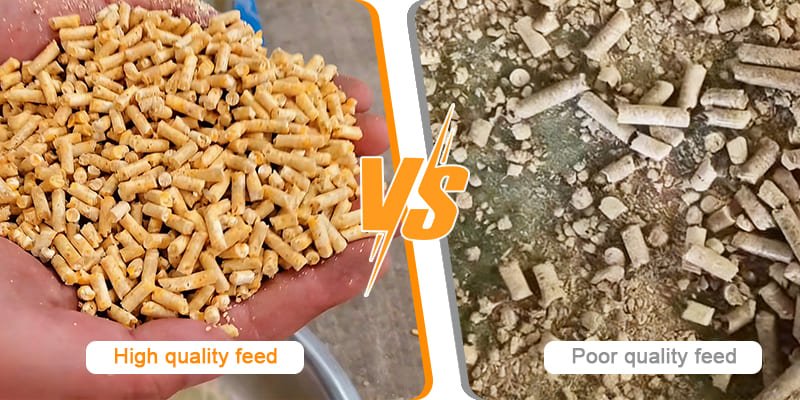
I remember a client in Turkey who was struggling with pellets that were too rough. They thought their machine was faulty, but after a quick check, we found their material moisture was simply too high. A small adjustment solved the problem completely. This experience highlights how critical it is to balance your machine's condition with your material preparation. Let's explore this further.
The Role of the Die and Rollers
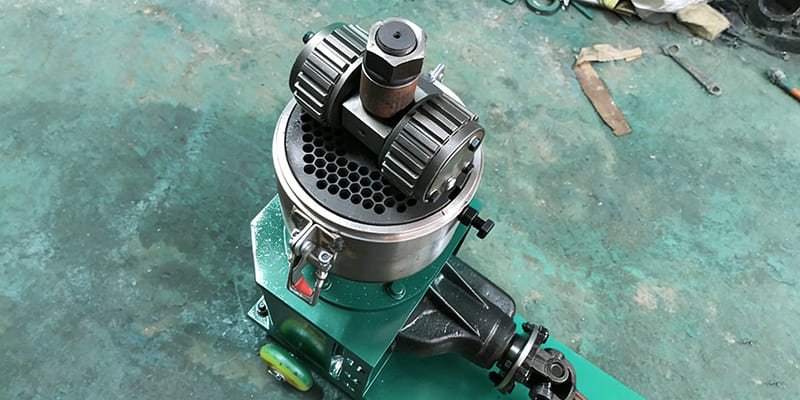
The heart of your operation is the interaction between the flat die and the pressure rollers. If this isn't perfect, your pellet quality will suffer. A brand new die, for example, has sharp, unpolished holes. It needs to be "broken in" before it can produce smooth pellets. On the other hand, an old, worn-out die becomes too thin to provide enough compression, which results in excess powder.
Getting Raw Materials Right
Your machine is only as good as the material you feed it. Moisture content is the most important factor. If your material is too dry, it won't bind together. If it's too wet, it won't pass through the die holes correctly, leading to rough surfaces. Here’s a quick guide:
| Problem | Common Cause | Solution |
|---|---|---|
| Low Output / No Pellets | New die needs conditioning; incorrect moisture level. | Run an oily mix to polish the die; adjust moisture content. |
| Too Much Powder | Low moisture content; worn-out, thin die. | Increase moisture in materials; replace the flat die. |
| Rough Pellet Surface | High moisture content; new die needs conditioning. | Reduce moisture content; run an oily mix to polish the die. |
| Uneven Pellet Size | Worn or improperly set cutter knife. | Sharpen, replace, or adjust the cutter knife position. |
| Poor Pellet Formation | Incorrect material formula; worn die or rollers. | Adjust the binding agents in your formula; replace worn parts. |
Why does my machine suddenly stop or make loud noises?
Nothing is more alarming than a sudden loud noise or a complete machine shutdown. This instantly stops production and points to a potentially serious, costly mechanical issue.
Sudden stops and loud noises are urgent warnings, often caused by a foreign object inside the machine, a damaged bearing, or a severe motor overload. You must shut down immediately to prevent further damage.
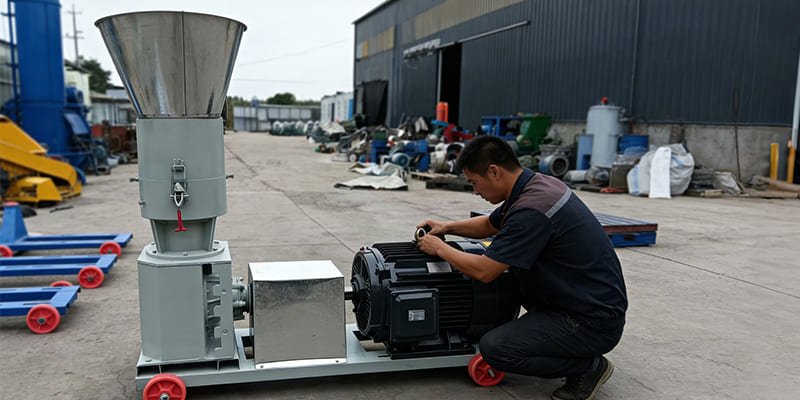
Mechanical failures are a major concern, which is why at STROSEN, we put every single machine through rigorous load, vibration, and environmental testing before it ships. We know reliability is non-negotiable. An unexpected shutdown can throw an entire operation off schedule. The good news is that most of these catastrophic failures are preventable with attention to detail and consistent maintenance. A simple daily check for loose parts or unusual sounds can save you from a major breakdown.
Catching Problems Before They Start
Most big mechanical issues begin as small, easily ignored problems. For example, excessive vibration often starts because the machine isn't sitting on a level surface or a few bolts have come loose. If you ignore it, that constant shaking will eventually destroy your bearings. Likewise, pushing the machine too hard by overloading the motor will cause it to overheat and fail long before its time.
A Schedule for Prevention
Regular maintenance is your best defense against surprises. This means cleaning out hard debris, checking and tightening components, and lubricating moving parts. A well-maintained machine is a reliable machine. Here are common failures and how to prevent them:
| Problem | Common Cause | Solution |
|---|---|---|
| Abnormal Noise | Hard foreign object inside; damaged bearing; loose parts. | Stop immediately, remove the object; replace the bearing; tighten all components. |
| Sudden Stop | Severe motor overload; foreign object in the compression chamber. | Reduce the load, replace the fuse; stop and clear the obstruction. |
| Motor Overheating | Continuous overload; poor ventilation; motor fault. | Reduce material feed rate; clean motor fins and fan; service or replace the motor. |
| Fast Wear & Tear | Abrasive materials; roller-die gap is too small; poor lubrication. | Screen raw materials for impurities; adjust the gap; lubricate regularly. |
| Excessive Vibration | Unstable installation base; loose components; damaged bearings. | Level and secure the machine; tighten all bolts; replace damaged bearings. |
Conclusion
Mastering these common issues turns frustration into efficiency. With proper maintenance and awareness, you can ensure your pellet machine runs smoothly and produces high-quality pellets every time.
FAQ
Question: Why is my new pellet machine not producing pellets?
Answer: Your new machine's die likely needs conditioning. Run an oily mixture through it first to polish the die holes. Also, verify your raw material’s moisture content is correct, as material that is too dry or too wet will fail to form pellets properly.
Question: What's the main reason my pellets are so powdery?
Answer: The most common cause for powdery pellets is low moisture content in your raw materials. This prevents proper binding. Another major reason is a worn-out flat die that is too thin to create the necessary compression for solid pellet formation.
Question: Should I be worried if my pellet machine starts vibrating?
Answer: Yes, excessive vibration is a warning sign. It often indicates loose components or an unstable installation base. Ignoring it can lead to damaged bearings or other serious mechanical failures, so you should stop the machine and investigate the cause immediately.
Need a Machine You Can Rely On?
Tired of dealing with unreliable equipment? Get a custom-built, tested pellet machine that meets your exact production needs.