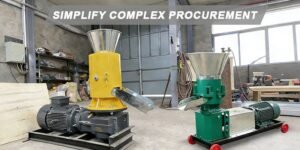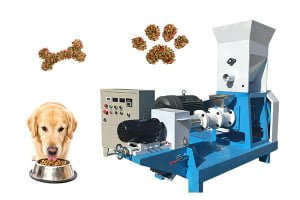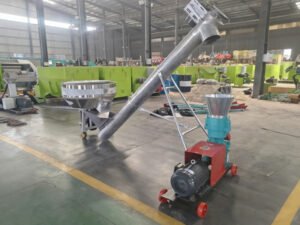

Worried about rising feed costs and uncertain quality? These issues directly impact your bottom line. Making your own pellets puts you in control, ensuring both savings1 and quality.
Yes, making your own feed pellets can save significant money. You cut out the middleman, use local raw materials2, and reduce transportation costs3. This gives you complete control over feed quality4 and formulation, directly boosting your farm's profitability5 and animal health6.

The idea of saving money is always attractive. But the benefits go far beyond just the initial cost reduction. I've worked with clients in the agricultural machinery industry for over 20 years, and I've seen how this one decision can transform an entire operation. It’s not just about spending less; it’s about gaining more control. Let's break down exactly where these savings1 and advantages come from, and you'll see why so many large-scale producers are making the switch.
How Does Making Your Feed Pellets Directly Cut Costs?
Paying for commercial feed includes the manufacturer's profit, marketing, and long-haul shipping. These hidden expenses eat into your budget without adding any nutritional value7 for your animals.
Making your own pellets cuts costs by eliminating brand markups, reducing transportation fees, and allowing you to buy raw materials in bulk at lower prices. You can also use locally sourced ingredients or even farm by-products, turning potential waste into valuable feed.
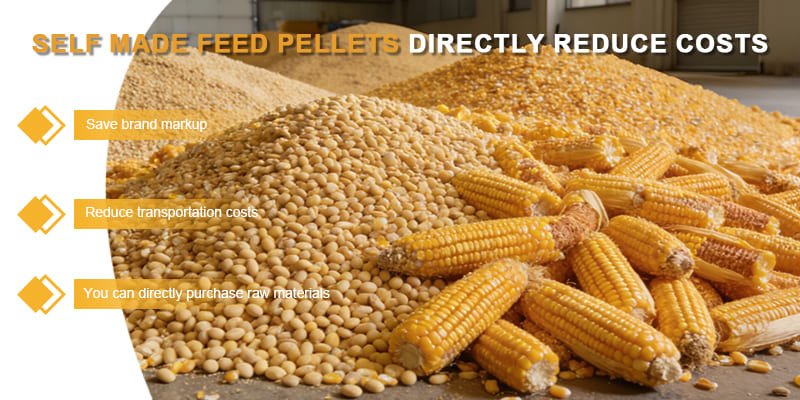
When I talk with procurement managers, their primary goal is to reduce operational costs without sacrificing quality. This is where in-house feed production becomes a powerful tool. The cost structure8 of commercial feed is layered with expenses that have nothing to do with the feed itself. By investing in your own pellet mill, you strip away these layers and pay only for what matters: the ingredients.
Breaking Down the Cost Components
The most immediate saving comes from eliminating the "middleman." Commercial feed brands have overhead—factories, staff, marketing campaigns, and of course, a profit margin. When you produce your own, you are essentially paying wholesale prices for your feed. You can source raw materials like corn, soybeans, and wheat directly from growers or wholesalers in large quantities, which drastically lowers the per-unit cost. At STROSEN, we design our machines to handle a wide range of raw materials, giving you the flexibility to purchase whatever is most cost-effective at the time.
The Power of Local Sourcing and Waste Utilization
Transportation is another major cost associated with commercial feed. Bringing feed in from a distant manufacturing plant adds significant expense. By producing on-site, you nearly eliminate these costs. Better yet, you can use ingredients that are locally available, including your own agricultural by-products9. Things like corn stalks, rice husks, or sunflower cake can be processed into nutritious feed. This not only saves money but also turns a waste disposal problem into a valuable resource.
Here’s a simple breakdown:
| Cost Factor | Buying Commercial Feed | Making Your Own Pellets |
|---|---|---|
| Ingredient Cost | High (Includes processing) | Low (Raw material prices) |
| Markup & Profit | Included in final price | Eliminated |
| Transportation | Significant cost | Minimal or zero |
| Waste Utilization | Not possible | Turns waste into feed |
This shift in cost structure8 directly boosts your bottom line and improves overall efficiency.
Can I Control Feed Quality and Customize Formulas?
Using standard commercial feed doesn't always meet the specific needs of your animals. This one-size-fits-all approach can limit performance, health, and ultimately, your output.
Absolutely. In-house production gives you 100% control over every single ingredient. You can create custom formulas10 tailored to specific animal types, growth stages, or health requirements. This ensures consistent quality, avoids unwanted fillers, and helps you meet international certification standards.
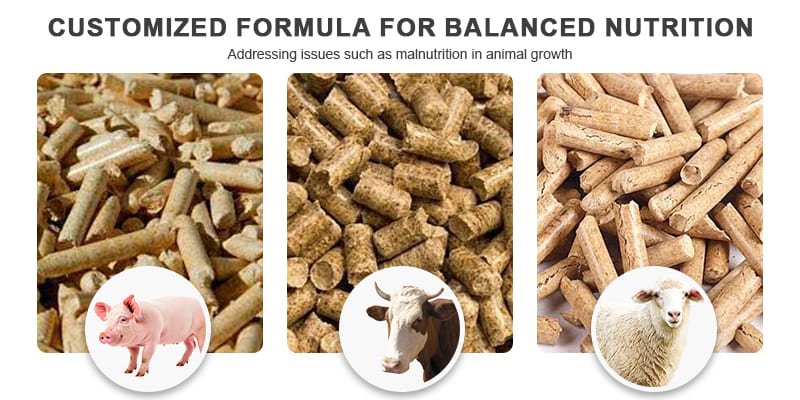
For any major agricultural brand, consistency is key. Your brand's reputation depends on the quality and health of your livestock or products. When you buy feed from an external supplier, you are placing that trust in their hands. I’ve heard from many brand managers who were frustrated by batch-to-batch inconsistencies in commercial feed. Making your own pellets removes this uncertainty entirely. You become the master of your own quality control.
Tailored Nutrition for Peak Performance
Different animals have different needs. A dairy cow requires a different nutrient profile than a beef cow. A laying hen needs a different formula than a broiler chicken. With your own pellet mill, you can fine-tune your recipes to match these exact requirements. You can adjust protein levels, add specific vitamins and minerals, or create a high-energy formula for animals in a specific growth phase. This level of customization leads to better animal health6, faster growth rates, and higher yields. It's a strategic advantage that a generic feed bag simply can't offer.
Ensuring Ingredient Integrity and Brand Safety
One of the biggest risks in sourcing commercial feed is the lack of transparency. You don't always know what fillers, binders, or preservatives are being used. By sourcing and mixing your own raw materials, you have complete oversight. You can ensure your feed is free from contaminants and meets strict quality standards like CE and ISO 900111. For our clients who export, this is not just a benefit—it's a necessity. We build our machines with durable, food-grade materials like high-quality steel and alloy components to ensure the entire production process maintains the integrity of your feed, protecting both your animals and your brand's reputation.
Key benefits of customization include:
- Optimal animal health6 and reduced need for medication.
- Increased growth rates and productivity.
- Formulas designed for specific life stages (e.g., starter, grower, finisher).
- Full traceability of every ingredient in your feed.
Does In-House Production Improve My Supply Chain?
Supply chain disruptions can halt your operations overnight, causing massive financial losses. Relying on a single feed supplier makes your business incredibly vulnerable to their production or logistic problems.
Yes, it significantly strengthens your supply chain12. In-house pellet production reduces dependency on external suppliers, protecting you from price volatility and delivery delays. It creates a stable, predictable supply of essential feed, ensuring your operations run smoothly even during market disruptions.
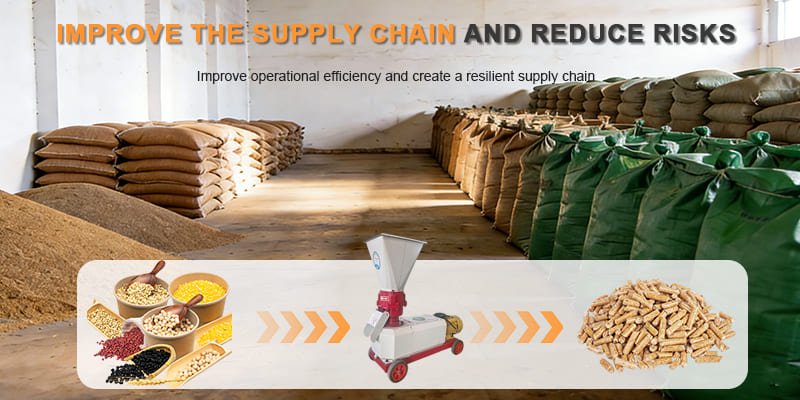
In today's global market, a resilient supply chain12 is no longer a luxury; it's a core part of a successful business strategy. A delay from your feed supplier can have a domino effect across your entire operation. We’ve all seen how quickly things can change due to weather, trade policies, or logistical bottlenecks. For a large enterprise with millions of dollars on the line, you can't afford to be at the mercy of someone else's schedule. This is why many of our clients in markets like Russia, Turkey, and Australia are investing in their own production capabilities.
From Vulnerability to Resilience
When you depend on an external supplier, you are exposed to all of their risks. If their ingredient costs go up, your prices go up. If their factory has a problem, your delivery is delayed. If their transport lines are cut, you get nothing. By bringing feed production in-house, you build a buffer against this volatility. You can store raw materials on-site, giving you a reserve to draw from during market shortages. You are in control of the production schedule13, so you can increase output when demand is high or scale back when it's not. This transforms your feed supply from a point of weakness into a source of stability and strength.
Operational Efficiency On-Demand
In-house production allows you to operate on a "just-in-time" basis. You can produce the exact amount of feed you need, right when you need it. This reduces the need for massive storage facilities for finished feed, which can spoil over time. It also improves cash flow, as you are not tying up capital in large stockpiles of feed bags. Our production lines are designed for efficiency, with some clients reporting up to a 30% increase in operational speed and a 20% reduction in energy consumption14. This creates a lean, agile operation that can adapt quickly to changing needs, making your entire business more competitive.
Conclusion
In summary, making your own feed pellets saves money, gives you full control over quality and nutrition, and builds a more resilient and efficient supply chain12 for your business.
Discover how in-house feed production can significantly reduce your operational costs. ↩
Learn how sourcing locally can enhance quality and reduce costs in feed production. ↩
Understand the impact of transportation on feed costs and how to minimize them. ↩
Learn about the key factors that influence the quality of feed and how to control them. ↩
Find out how in-house feed production can directly impact your farm's profitability. ↩
Explore the connection between feed quality and the overall health of your animals. ↩
Explore ways to guarantee the nutritional quality of your custom feed. ↩
Understand the hidden costs in commercial feed and how to avoid them. ↩
Discover innovative ways to utilize by-products for cost-effective feed. ↩
Find out how to tailor feed formulas to meet specific nutritional needs of your livestock. ↩
Understand the importance of these standards for ensuring feed safety and quality. ↩
Understand how controlling your feed production can strengthen your supply chain. ↩
Learn strategies to effectively manage your feed production schedule for efficiency. ↩
Explore methods to lower energy costs while maintaining production efficiency. ↩