Choosing the wrong pellet machine is a costly mistake. It can lead to production bottlenecks1, poor pellet quality2, and a failed investment, leaving your operation behind schedule.
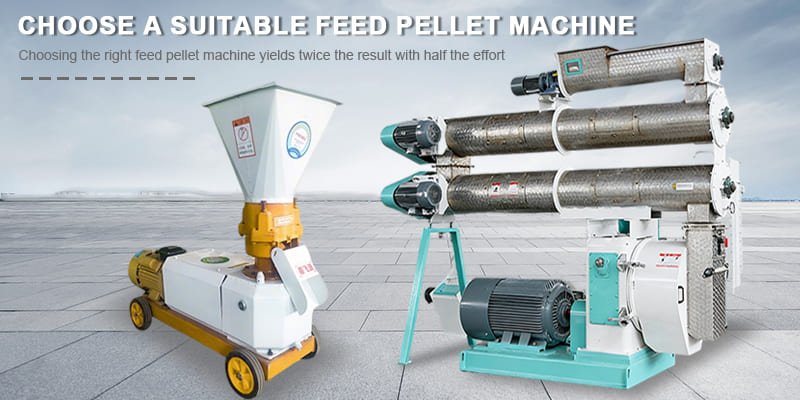
The main difference is scale and efficiency. A flat die pellet machine3 is best for small to medium-scale production and handles a wider variety of raw materials. A ring die machine is built for large, industrial-scale output with higher consistency and durability.
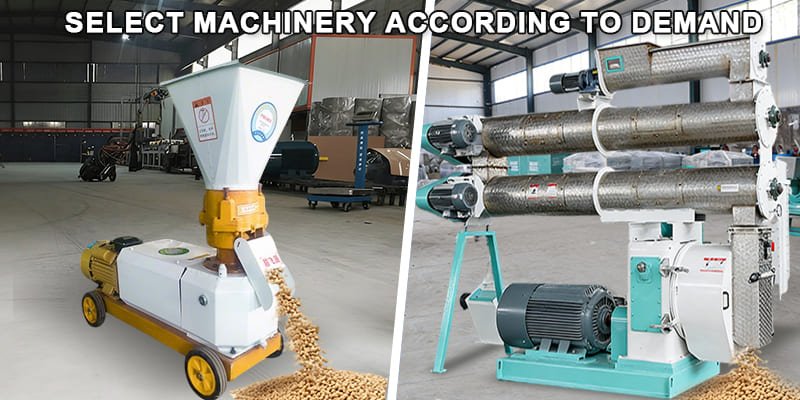
This is one of the first and most critical questions a procurement manager asks after deciding to produce their own feed. In my 25 years of helping companies build their production lines, I've seen that the right choice here sets the foundation for your entire operation's success. Both technologies work well, but they are designed for very different purposes. Let's break down the mechanics, benefits, and ideal uses for each so you can make an informed decision that aligns with your specific goals.
When is a flat die pellet machine3 the right choice?
You want to start making pellets but are worried about the high cost of industrial equipment. Overspending on a machine that's too big for your needs can destroy your return on investment4.
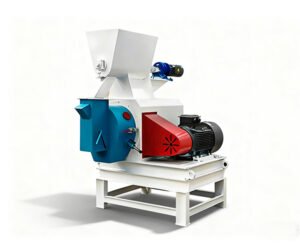
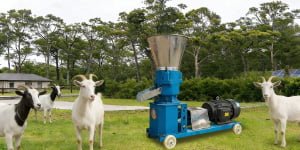
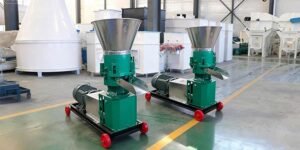
A flat die pellet machine3 is the perfect choice for small to medium-scale operations, pilot projects, or when working with diverse raw materials. Its lower initial cost and simple design make it an accessible entry point for farms, labs, or businesses testing new formulas.
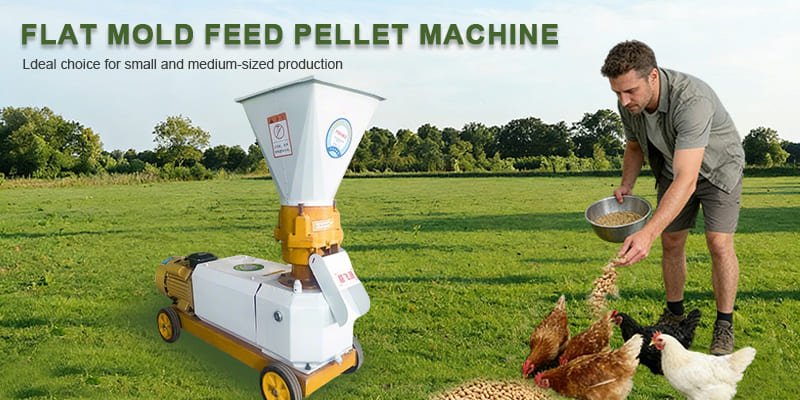
Think of a flat die machine as the workhorse for flexible, smaller-scale production. The mechanics are straightforward: a flat, circular die plate remains stationary while rollers press the raw material down through the holes in the die. This downward force is excellent for processing less dense, more fibrous materials5 like grass, alfalfa, and sawdust, which might be challenging for other systems. For a business just entering the feed production market or a research team developing new pellet formulas, the flat die offers unmatched versatility.
I often recommend these models to agricultural cooperatives or specialized brand managers who need to produce custom, small-batch feeds. Their simplicity means easier operation and maintenance, which is a big plus when you don't have a large, dedicated technical team6.
Key Advantages of a Flat Die Machine:
- Lower Initial Investment: The upfront cost is significantly less than a ring die machine, reducing the financial barrier to entry.
- Material Versatility: It performs exceptionally well with a wide range of materials, especially those with high fiber content.
- Simple Operation: The design is less complex, making it easier to operate, clean, and maintain.
However, its output is naturally lower, and the wear on the die and rollers can be higher per ton of pellets produced compared to its industrial counterpart.
Why do large-scale operations prefer a ring die pellet machine?
Your operation requires massive, continuous output to meet market demand. Using a smaller machine creates production bottlenecks1, increases labor costs, and puts your supply chain at risk.
Ring die machines are built for high-volume, continuous industrial production. Their design uses centrifugal force to efficiently create high-density, durable pellets, ensuring consistent quality and lower wear-and-tear per ton, which is essential for maximizing profitability at scale.
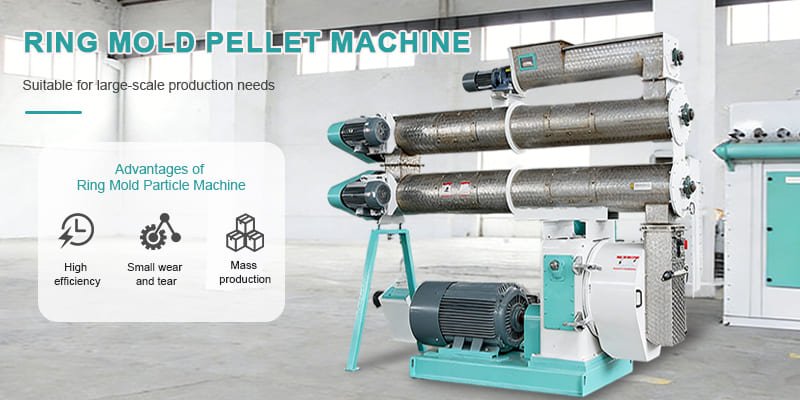
When a client needs to produce thousands of tons of feed per month, there is no substitute for a ring die machine. Its design is engineered for efficiency and durability. In this system, a vertical "ring" die rotates at high speed. Rollers on the inside press the raw material outward through the holes in the die. This process uses centrifugal force, which helps feed material evenly and creates very dense, high-quality pellets. This is critical for large brands that need a uniform product for bagging and distribution.
For a procurement manager like 'Li Manager', whose company purchases over $5 million in equipment annually, reliability is everything. The components in our ring die machines, from the alloy steel dies to the powertrain, are tested to last over 8,000 hours of continuous operation. This level of durability, combined with high output, ensures a lower total cost of ownership and protects the brand's reputation for quality, which is vital for meeting international standards like CE and ISO 9001.
| Feature | Flat Die Machine | Ring Die Machine |
|---|---|---|
| Mechanism | Rollers press down on a stationary die | Rollers press outward on a rotating die |
| Pellet Density | Good | Excellent, very uniform |
| Output Volume | Low to Medium | High to Very High |
| Best For | Fibrous materials, small batches | High-volume, continuous production |
| Durability | Moderate (higher wear per ton) | High (lower wear per ton) |
What key factors should I consider before choosing?
You understand the technical differences, but you're not sure how they apply to your business. Choosing based on just one factor, like price, can lead to a machine that doesn't fit your needs.
To choose correctly, evaluate four key factors: your required production scale (output in tons/hour), your primary raw materials, your total budget (upfront cost vs. long-term ROI), and your specific pellet quality2 requirements. A clear analysis of these points will guide your decision.
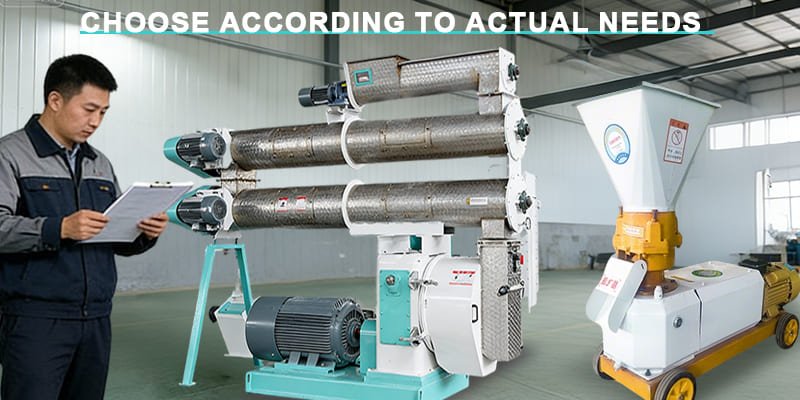
Making the right decision requires a quick audit of your operational needs7. I always walk my clients through these four pillars to ensure their investment is sound. This isn't just about buying a machine; it's about investing in a solution that will support your growth for years to come.
1. Production Scale
How many tons of pellets do you need to produce per hour or per day?
- Under 1 ton/hour: A flat die machine is almost always the more economical and practical choice.
- Over 2 tons/hour: You should be looking exclusively at ring die machines to achieve the necessary efficiency and speed.
2. Raw Materials
What will you be pelletizing?
- Light, fluffy, or fibrous materials5 (e.g., alfalfa, grass, certain biomass): A flat die's downward pressure often works better.
- Grains and standard feed mixes (e.g., corn, soy, wheat): A ring die machine excels with these materials and produces a higher quality pellet.
3. Budget and Return on Investment (ROI)
Consider both the initial purchase price and the long-term operational costs.
- Limited upfront capital: A flat die machine offers a lower entry cost.
- Focus on lowest cost-per-ton: A ring die machine, while more expensive initially, has lower wear and energy costs8 per ton, providing a better ROI for large-scale producers.
4. Pellet Quality Requirements
How important is pellet density, durability, and uniformity?
- For on-farm use: The quality from a flat die is generally sufficient.
- For commercial sale9 and bagging: The high-density, durable, and polished pellets from a ring die machine are essential for shelf life10 and brand reputation.
Conclusion
The right choice depends on your scale. Flat die machines are ideal for smaller, flexible operations, while ring die machines are the standard for industrial production. Assess your needs carefully.
Discover strategies to prevent production bottlenecks and ensure smooth operations in pellet manufacturing. ↩
Understand the key factors that influence pellet quality and how to achieve the best results in your production. ↩
Explore the advantages of flat die pellet machines for small to medium-scale production and their versatility with raw materials. ↩
Discover how to effectively calculate ROI for pellet machines to ensure a profitable investment. ↩
Identify the best fibrous materials for processing with flat die pellet machines to optimize production. ↩
Find out what skills and expertise are essential for a technical team to support pellet production operations. ↩
Explore methods to evaluate your operational needs to make informed decisions about pellet production. ↩
Learn about the impact of energy costs on pellet production and how to manage them effectively. ↩
Understand the standards and requirements for producing pellets that are suitable for commercial sale. ↩
Explore the factors that affect the shelf life of pellets and how to ensure product longevity. ↩