.jpg)
Tired of watching your animals scatter expensive feed? This daily frustration costs you money and compromises their nutrition, leaving you feeling helpless and throwing cash on the ground.
A feed pellet machine1 transforms your custom mix into dense, waste-proof animal feed pellets2. It ensures every bite is a complete meal, giving you full control over nutrition and significantly reducing costs.
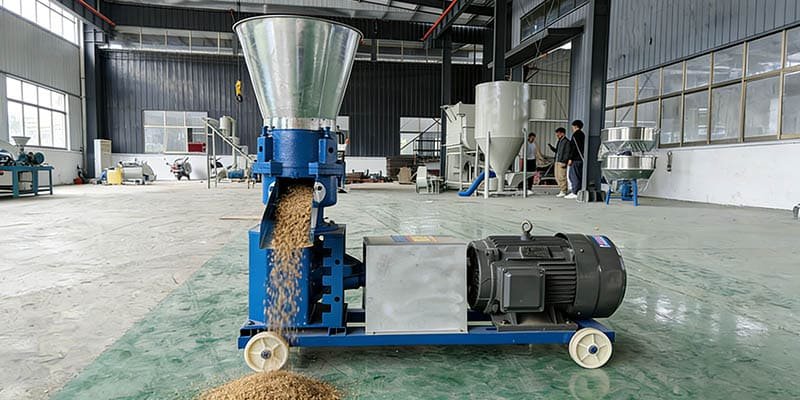
If you raise chickens or other livestock, you’ve seen it happen. This isn't just frustrating; it means you're losing money and control. But what if you could take that control back? Making your own homemade livestock feed3 is a smart move to reduce livestock feed costs4 and know exactly what goes into your animals’ diet. Imagine turning simple grains and supplements into perfect nuggets right in your own garage or barn. This is all possible with a surprisingly simple tool: the feed pellet machine1.
Why Are Pellets a Game-Changer for My Livestock?
Your animals pick out the tasty bits of their food, missing key nutrients. This selective eating creates an unbalanced die5t, even with high-quality feed, undermining their health and your efforts.
Pellets solve this by compressing a complete, balanced formula into every single bite. This guarantees consistent nutrition and eliminates picky eating, while also being far more practical for storage and handling.
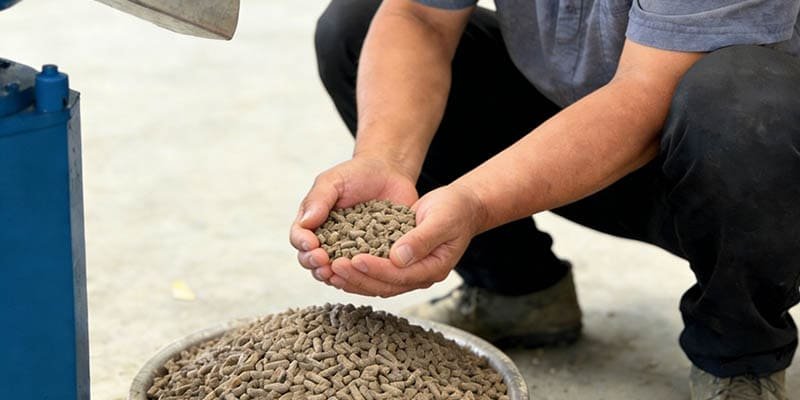
When an animal can pick and choose, it often misses out on essential vitamins and minerals you’ve carefully mixed into the feed. A pellet makes sure your flock gets consistent and total nutrition with every bite.
Finally, pellets are just more practical for farm life. They're far less dusty than loose mash, which means cleaner air and less mess. They also take up less space in your shed, and their dense form helps them resist moisture6 and pests. This gives them a longer, more stable shelf life, protecting your investment and ensuring your animals always have quality feed ready. This combination of benefits makes pelleting one of the most effective upgrades for any small farm or homestead.
How Does a Feed Pellet Machine Actually Work?
The idea of turning a loose powder into a hard, durable pellet can seem complex. You might feel it requires industrial knowledge, making it seem too difficult for home use.
It’s simpler than you think. The machine uses powerful rollers7 to crush your feed mix and force it through a steel plate with holes, called a die. Intense pressure and friction heat bind the ingredients together.
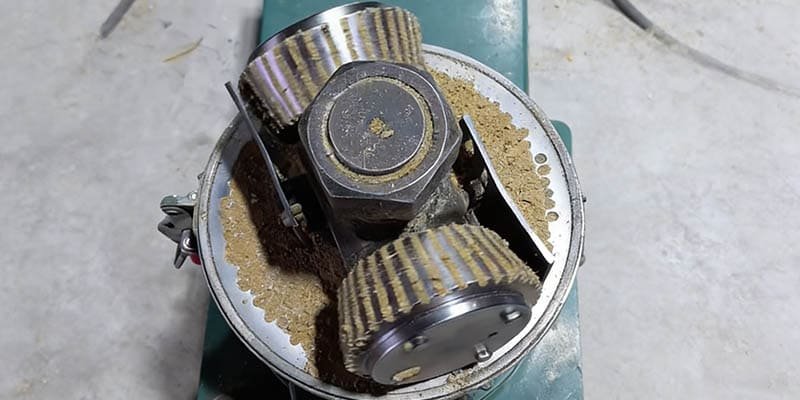
The process is a lot like a heavy-duty meat grinder. Inside, your feed meets two key parts: heavy rollers7 and the die. As the machine runs, the rollers7 continuously crush the loose feed, forcing it down and through the die's tiny holes with thousands of pounds of pressure. This incredible force also generates intense heat from friction, which activates natural compounds in the ingredients, binding them into a pellet. For this to work perfectly, however, careful preparation is everything.
The 'Secret' of Grinding
You can’t make pellets from whole grains. All raw materials must be ground into a consistent, flour-like powder. This fine texture is essential for the material to pack tightly and flow smoothly, creating a dense, uniform pellet.
The 'Secret' of Moisture
Your feed mix needs about 15% moisture6 to bind properly. Too dry, and your pellets will crumble; too wet, and you'll get a mushy paste that jams the machine. Mastering fine grinding and correct moisture6 is the true secret to success.
Flat Die vs. Ring Die: Which Pellet Mill Is Right for My Farm?
When you start searching, you'll see flat die and ring die mill8tps://www.happymould.com/news/pellet-mill-die-the-key-component-of-pellet-mills/)5 mills. Choosing the wrong type is an expensive mistake that can leave you with a machine that is completely unsuited for your needs.
For a small farm or homestead, the choice is clear: a flat die mill9tps://www.happymould.com/news/pellet-mill-die-the-key-component-of-pellet-mills/)5 mill. It has a simpler design, a lower cost, and is perfectly matched for small-scale use. Ring die mills are for industrial production.
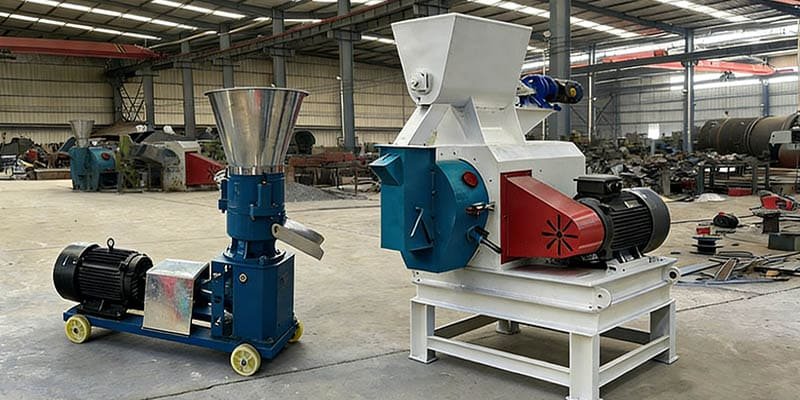
A flat die mill9tps://www.happymould.com/news/pellet-mill-die-the-key-component-of-pellet-mills/)5 mill is like a heavy-duty kitchen appliance, designed for a homestead. A ring die mill8tps://www.happymould.com/news/pellet-mill-die-the-key-component-of-pellet-mills/)5 mill is an industrial powerhouse built for commercial operations churning out tons of product per hour.
| Feature | Flat Die Mill | Ring Die Mill |
|---|---|---|
| Best For | Small-scale / Home use | High-volume / Commercial |
| Design | Simpler, easy to maintain | More complex, industrial-grade |
| Cost | Lower initial investment | Higher initial investment |
| Output | Lower (kg/hour) | Very High (tons/hour) |
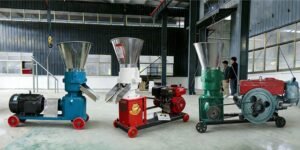
Finally, you’ll need to power your mill. Small electric models are perfect for a garage. For off-grid work, diesel engines provide standalone power. If you have a tractor, a Power Take-Off (PTO)10 model connects to its engine, cleverly leveraging equipment you already own.
How Do I Choose the Right Mill and Is It Really Cheaper?
Making the final decision is tough. You don't want to invest in the wrong machine or discover the savings aren't real, leaving you with buyer's remorse and a useless tool.
First, match the die hole diameter11 to your animals. Second, choose an output capacity12 based on your herd size. And yes, it is cheaper over time because you can buy raw ingredients in bulk.
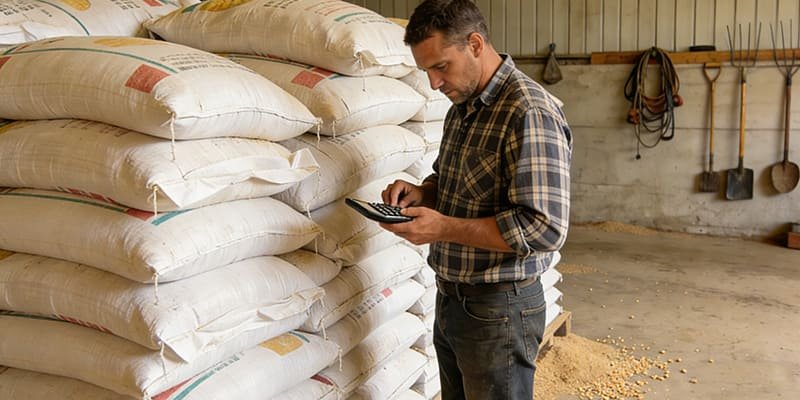
Choosing the right pellet mill boils down to three questions.
- What are you feeding? The pellet size must match the animal. This is controlled by the die hole diameter11. Small 3mm holes are for chickens, while larger 6mm holes work for goats.
- How much feed do you need? Your herd size determines the output capacity12 needed. A model producing 40 kg/hour is plenty for a backyard flock, but a small farm needs more power to be efficient.
- Where will you work? Your location dictates your power source, whether it's an electric motor, a diesel engine, or a PTO version for your tractor.
So, is it really cheaper? The machine is an upfront investment, but the real savings come from purchasing raw ingredients in bulk. Before you buy, do this simple math: calculate your current monthly feed bill, then call a local supplier for bulk prices on raw ingredients. That comparison will clearly show you your potential savings.
Conclusion
Making your own feed pellets gives you complete control over nutrition, drastically cuts costs by buying in bulk, and eliminates waste. It's a smart investment for any modern homesteader.
Understand the functionality of feed pellet machines and their benefits for farmers. ↩
Explore the advantages of animal feed pellets for livestock nutrition and cost savings. ↩
Learn how to create nutritious homemade livestock feed to enhance your animals' diet. ↩
Learn effective methods to calculate and minimize your livestock feed expenses. ↩
Learn about the critical role of the die in shaping animal feed pellets. ↩
Explore the importance of moisture levels in producing high-quality feed pellets. ↩
Find out how rollers contribute to the efficiency of feed pellet production. ↩
Understand the applications and benefits of ring die mills in commercial feed production. ↩
Discover why flat die mills are ideal for small-scale feed production. ↩
Learn how PTO systems can enhance the efficiency of your feed pellet machine. ↩
Find out how die hole diameter affects pellet size and animal nutrition. ↩
Understand how output capacity impacts feed production efficiency for your farm. ↩