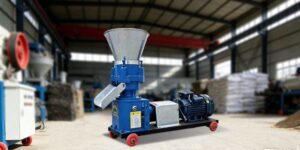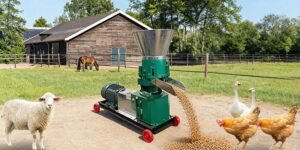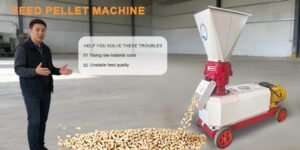

You want to produce feed efficiently, but connecting different machines into a smooth line is daunting. A single bottleneck can halt everything, wasting time, materials, and money.
A complete production line1 automates the process from raw material to finished pellet. It involves a mixer for uniformity, a conveyor for steady feeding, and a powerful pellet machine2 at its core. This integration ensures high output3 and consistent quality4 without manual labor.
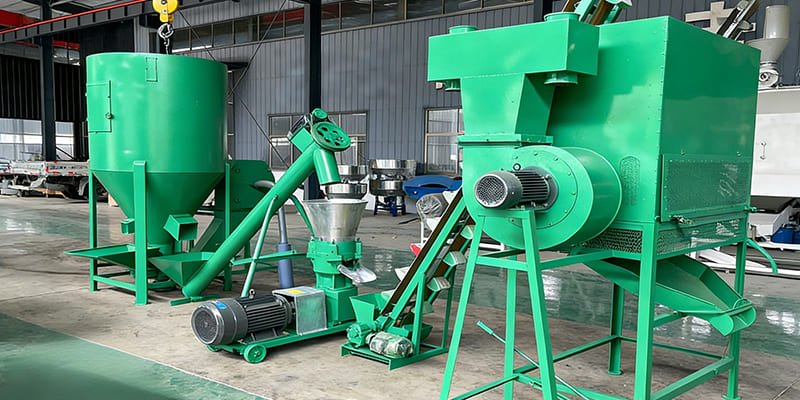
As someone who has helped set up countless production line1s over the past 25 years with STROSEN, I can tell you that true efficiency isn't just about having a powerful pellet machine2. It's about how the entire system works together. A well-designed line flows like a river, transforming raw ingredients into valuable feed with minimal effort. Let’s walk through the exact steps to create this seamless flow.
How Do You Guarantee a Perfectly Uniform Raw Material Mix?
You've got your ingredients ready, but just throwing them together is a recipe for disaster. Uneven mixing means some pellets are nutritious while others are just filler, leading to poor animal growth.
Use a stainless steel mixer5 to thoroughly blend all raw materials, like corn cobs and straw, for at least 2-3 minutes. This critical step ensures every single pellet will have the exact same nutritional composition6, guaranteeing consistent quality4 in your final product.
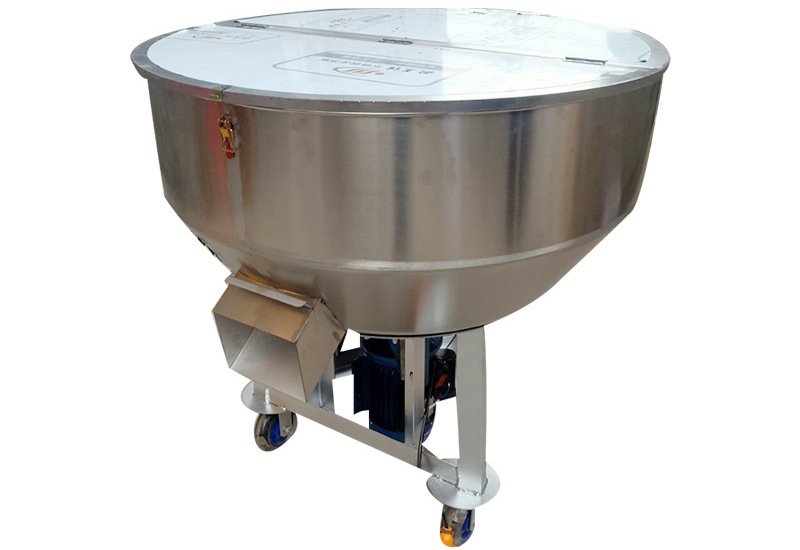
I've seen clients struggle because they underestimated this first step. They'd end up with clogged machines and inconsistent animal performance. The secret to a great pellet starts long before the material ever enters the pellet machine2. It starts with a perfect mix. This stage is all about creating a homogeneous base material7. When every particle of corn, soy, and supplement is evenly distributed, you ensure that every pellet coming out of the machine is a complete, balanced meal. This prevents animals from picking through their feed and ensures consistent growth across your entire herd or flock. A proper 2-3 minute mix in a robust machine like a ribbon or paddle mixer is non-negotiable. It eliminates "hot spots" of certain ingredients and creates a predictable flow for the next stage.
| Mixing Time | Result | Impact on Production |
|---|---|---|
| < 2 min | Inconsistent mix, visible clumps or layers. | Uneven pellet nutrition, potential machine clogs. |
| 2-3 min | Uniform, homogeneous powder. | Consistent pellet quality, smooth machine operation. |
| > 4 min | Over-mixing (can be an issue with some additives). | Wasted energy, potential for particle degradation. |
Why Does the Conveyor System Dictate Your Production Speed?
You've mixed your materials perfectly, but now you have a pile of feed on the floor. Moving it manually is slow, messy, and creates a massive bottleneck that starves your pellet machine2.
An automated conveyor8, like a 3-meter screw auger9, transports the mixed material to the pellet machine2 at a constant, steady rate. This consistent feeding is crucial for maximizing your pellet machine2’s output and preventing jams or inefficient, partial loads.
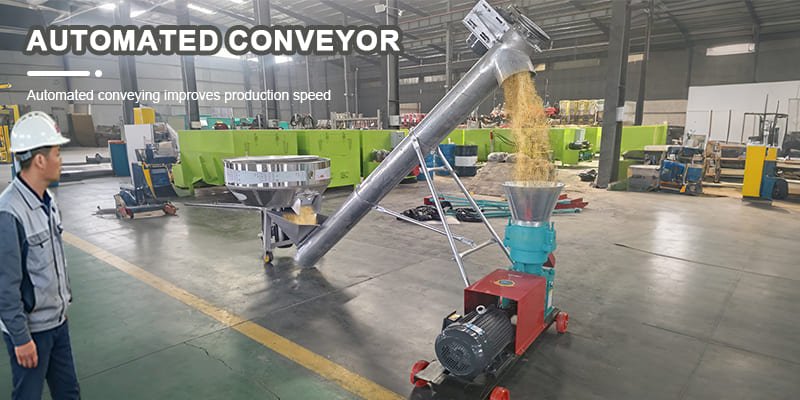
I remember a customer who initially tried to save money by having two workers shovel material into their new pellet machine2. The machine was constantly starting and stopping. It would get choked with too much feed, then run nearly empty. They were getting less than half the machine's rated output. We installed a simple screw auger9, and their production instantly doubled. The conveyor isn't just about moving material; it's the pacemaker for the entire line. By delivering a steady, uniform flow, it allows the pellet machine2 to operate at its peak, grabbing and compressing material consistently. This prevents the motor from being strained by sudden surges and ensures the rollers and die maintain optimal pressure. This simple piece of automation is the bridge that connects your preparation to your production, turning a series of separate tasks into one seamless, efficient process.
| Feeding Method | Consistency | Labor Requirement | Pellet Machine Performance |
|---|---|---|---|
| Manual Shoveling | Erratic | High | Poor (choking/starving) |
| Automated Auger | Steady | Low (supervisory) | Optimal (high, consistent) |
What Is the Real Power Behind the Pelletizing Process?
Your material is mixed and flowing steadily. Now comes the moment of truth. How does that uniform powder become a hard, durable pellet that animals can actually eat and digest?
The core is a powerful pellet machine2, like our STROSEN 260 model. It uses intense pressure and friction to cook and compress the material into dense, cylindrical pellets. This gelatinization process10 is what unlocks the feed’s nutritional value for your animals.
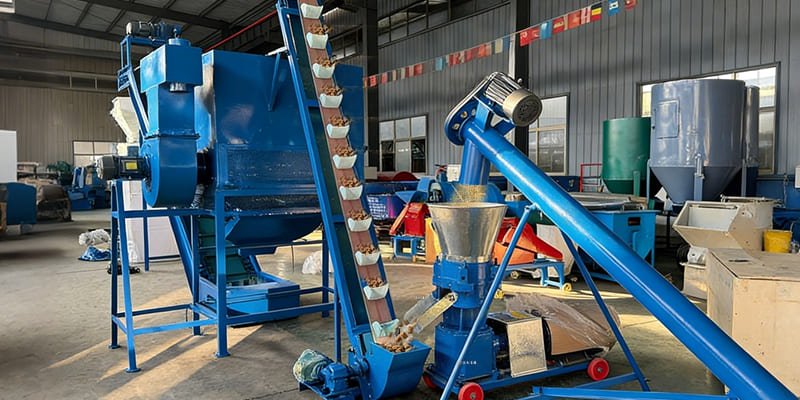
This is where the magic really happens. Inside the machine, the mixed material is subjected to immense force. Our 260 model, capable of producing 500-600 kg per hour, uses rollers to press the material through a die. The friction creates intense heat, which effectively "cooks" the starches in the feed in a process called gelatinization. This process is what transforms the feed's digestibility. Raw starch is hard for animals to break down, but gelatinized starch is readily absorbed, meaning your animals get more energy from the same amount of feed. The final output is a dense, dry pellet that is easy to handle and store. It’s not just about changing the shape; it’s about fundamentally increasing the nutritional and economic value11 of your raw materials.
The Benefits of Gelatinization during Pelletizing
| Feature | Before Pelletizing (Raw Mash) | After Pelletizing (Cooked Pellet) |
|---|---|---|
| Digestibility | Low (raw starches) | High (gelatinized starches) |
| Animal Absorption | Inefficient | Significantly improved, better feed conversion12 |
| Density | Low and dusty | High and solid |
| Storage Life | Prone to mold and pests | Longer shelf life, easy to store and transport |
Conclusion
Building an automated line with a mixer, conveyor, and pellet machine2 transforms production. This system ensures consistent quality4, boosts animal digestion13, and delivers a high return on investment through superior efficiency.
Learn about the essential components that make a production line efficient and effective. ↩
Understand the key features of pellet machines that enhance production capabilities. ↩
Explore how high output can enhance efficiency and profitability in feed production. ↩
Learn about methods to ensure consistent quality in feed, crucial for animal health. ↩
Discover why stainless steel mixers are preferred for their durability and efficiency. ↩
Discover the impact of nutritional composition on animal health and performance. ↩
Explore the significance of uniform mixing for optimal feed quality. ↩
Find out how automated conveyors streamline the production process and improve efficiency. ↩
Find out how screw augers enhance material transport and production efficiency. ↩
Learn how gelatinization improves feed digestibility and nutritional value. ↩
Discover how efficient pellet production can lead to better economic returns. ↩
Understand the concept of feed conversion and its impact on livestock efficiency. ↩
Explore the benefits of pelletizing for enhancing animal digestion and nutrient absorption. ↩