Tired of unpredictable feed costs and questionable quality? This uncertainty hurts your bottom line and animal health. Take control of nutrition and expenses with your own feed pellet machine.
An animal feed pellet machine1 transforms production by letting you create fresh, customized feed2 from local raw materials3. This lowers costs, improves animal nutrition4, and makes your operation more self-sufficient5 and profitable. It is a key investment for modernizing any farm or feed business.
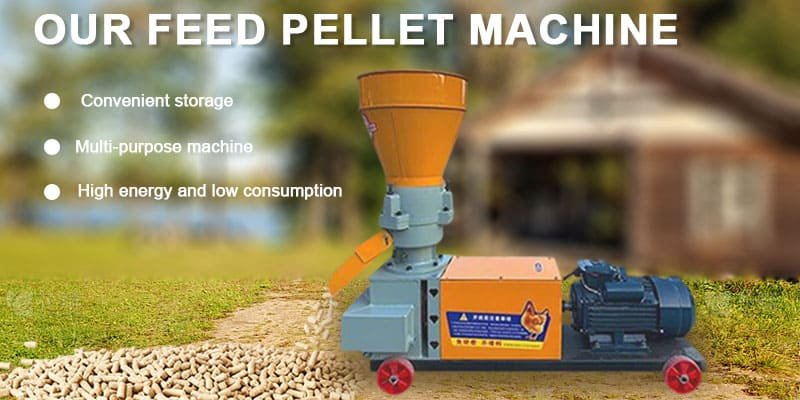
I often talk to procurement managers for large agricultural brands, people who manage multi-million dollar purchasing accounts. They tell me the same story. The constant battle with suppliers over price, quality, and delivery schedules is exhausting. Moving production in-house feels like a huge step, but I've seen it become a game-changer for my clients in places like Turkey and the USA. It puts them back in the driver's seat. Let's break down how this one machine can revolutionize your operation.
What Exactly Is an Animal Feed Pellet Machine?
Heard the term 'pellet machine' but unsure what it is? It can sound like complex industrial equipment, and this confusion might stop you from exploring a powerful cost-saving solution.
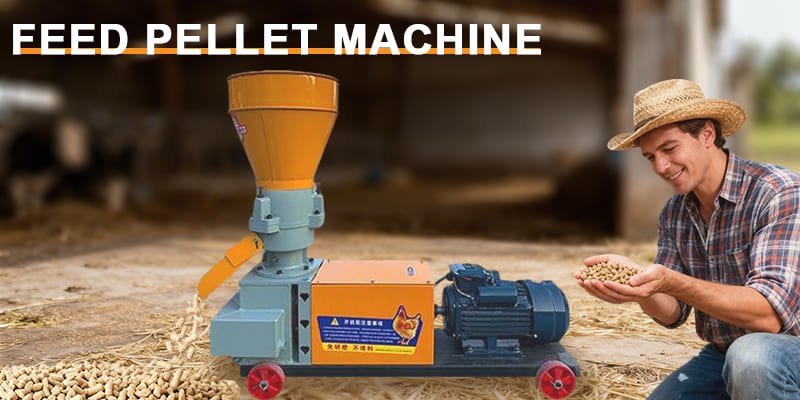
It's a machine that compresses soft, mashed raw materials like corn, soy, and grass into small, dense cylinders called pellets. This process makes feed easier to store, transport, and digest for animals like poultry, livestock, and fish, ensuring consistent nutrition in every bite.
In my 25 years of manufacturing equipment, I've learned to explain things simply. Think of a feed pellet machine as a powerful press. You put your mix of ground ingredients—the mash—into the top. Inside, a set of rollers pushes this mash with immense force through small holes in a thick steel plate called a die. The friction creates heat, which cooks the starches in the feed in a process called gelatinization. This makes the nutrients more digestible for your animals. As the compressed feed comes out of the holes, a knife cuts it into uniform pellets. It’s a simple mechanical process that creates a far superior product compared to raw mash.
This process is critical for a few reasons:
- Nutrient Density: Every pellet is a complete, balanced meal. Animals can't pick and choose certain ingredients, so they get the full nutritional benefit.
- Reduced Waste: Pellets are solid and easy to handle, unlike loose mash which can be spilled and wasted by animals.
- Improved Digestion: The heat from the process makes the feed easier for animals to digest, improving their feed conversion ratio6.
Why Should You Stop Buying Feed and Start Making It?
Relying on commercial feed suppliers7 is expensive and risky. You are vulnerable to sudden price hikes and supply chain problems, which leaves you with very little control over a core part of your business.
Making your own pellets cuts costs by using local ingredients and removing the middleman. It guarantees fresh feed with a custom formula for your animals' specific needs. This leads to better animal health, increased farm efficiency, and greater profitability in the long run.
I recently worked with a procurement manager for a large farming cooperative in Kenya. They were completely dependent on a single national supplier. When that supplier had production issues, the cooperative’s entire operation was at risk. The switch to in-house production was transformative. The benefits they saw are the same ones you can expect. First, the cost savings8 are immediate. You can buy raw materials when they are cheap and produce feed as needed, cutting out the supplier's margin and transportation costs. Second, you get total control over quality. You know exactly what goes into your feed—no fillers, no mystery ingredients. This leads to healthier animals and better products. Third, you gain independence. You are no longer at the mercy of someone else’s schedule or stock levels.
| Aspect | Buying Commercial Feed | Making Your Own Pellets |
|---|---|---|
| Cost | High (includes processing, transport, profit) | Low (only raw material & operational cost) |
| Quality Control | Low (trusting the supplier) | High (you choose every ingredient) |
| Freshness | Variable, can be weeks or months old | Guaranteed, made fresh on demand |
| Supply Chain | Vulnerable to disruption | Independent and self-sufficient5 |
How Does a Feed Pellet Machine Actually Turn Mash into Pellets?
The process of turning raw mash into solid pellets might seem like a mystery. This fear of a complex 'black box' system can stop you from embracing this powerful and straightforward technology.
Raw material mash is fed into the machine. High-pressure rollers then force the mash through the holes in a rotating steel die. The friction creates intense heat, which cooks and binds the feed. A cutter then slices the extruded pellets into your desired length.
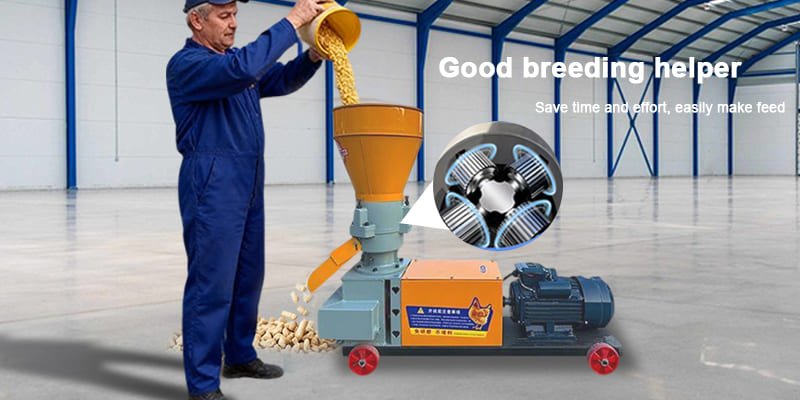
Let's demystify the process. It happens in four simple, continuous steps. As a manufacturer, we design our machines to make this as reliable as possible.
- Feeding: You load your prepared mash (a mix of ground grains, protein meals, etc.) into the hopper at the top of the machine. Gravity and sometimes an auger feed it down into the main chamber.
- Pressing and Extrusion: This is where the magic happens. Inside the chamber, you have the two key parts: the die and the rollers. In our most popular D-type models9, the flat die spins. The stationary rollers apply immense pressure, forcing the mash through the small holes in the die. The size of these holes determines your pellet diameter10.
- Gelatinization and Binding: The friction from this process creates temperatures of 60-80°C. This heat cooks the starches, making the feed more digestible, and also helps bind the pellet together naturally without needing extra binders.
- Cutting: As the compressed feed exits the die holes in long strands, an adjustable cutter slices them into consistent lengths. The pellets then fall out of the discharge chute, ready for cooling.
The quality of the die and rollers11 is everything. That is why we use high-alloy steel with special heat treatment, ensuring they last for over 8000 hours of operation.
What Really Determines the Price of a Feed Pellet Machine?
Prices for feed pellet machines seem to be all over the place online. This makes it hard to create a budget, and you risk either overpaying for features you don't need or buying a cheap machine that fails.
The price is mainly set by its production capacity12 (kg/hour), the motor type and power (electric, diesel), and the quality of its core components. Higher capacity and durable materials like alloy steel increase the initial cost but deliver a much better return on investment.
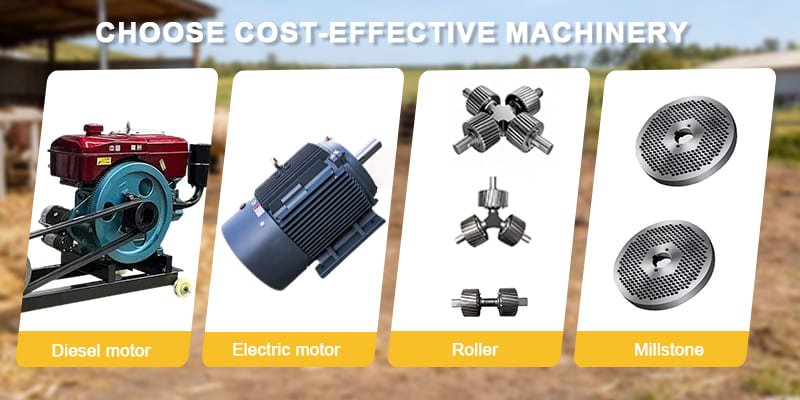
When I consult with a brand manager from a company in a market like Germany, we don't start by talking about the lowest price. We talk about value and total cost of ownership. A machine that costs 20% less but breaks down twice as often is a bad investment. The price you see is a reflection of several key factors. The biggest factor is capacity—a machine that produces 500 kg/hour will naturally cost more than one that produces 100 kg/hour because it has a larger motor and more robust parts. The power source13 also matters; diesel engines typically cost more upfront than electric motors. But the most important hidden factor is material quality. A machine with a heat-treated, alloy steel die will cost more than one with a basic cast iron die. But it will also last ten times longer and produce better pellets. That's a trade-off a smart manager is willing to make every time.
| Price Factor | Low-Cost Option | High-Value Option | Why it Matters |
|---|---|---|---|
| Capacity | 75-100 kg/h | 400-500 kg/h | Match production to your farm's scale. |
| Power Source | Electric Motor | Diesel Engine / PTO | Depends on your access to power. |
| Die/Roller Material | Standard Steel/Iron | Heat-Treated Alloy Steel | Determines durability and long-term cost. |
| Supplier | Online Reseller | Experienced OEM Manufacturer | Affects warranty, support, and reliability. |
How Can You Choose the Perfect Feed Pellet Machine for Your Needs?
With so many models and options, choosing the right feed pellet machine can feel overwhelming. Making the wrong choice leads to wasted money, low efficiency, and huge operational headaches for your business.
First, calculate your required daily feed output14 to determine capacity. Second, identify your raw materials to choose the right mill type. Finally, pick a power source13 that fits your farm's setup. Always choose a reputable supplier15 who guarantees their quality.
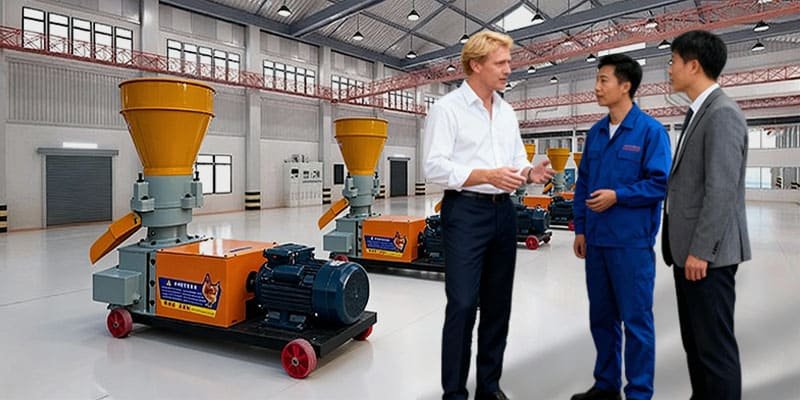
Let's make this simple. I use this checklist with every client, whether they are a small farm in Australia or a large distributor in Russia.
- Calculate Your Capacity: How many animals do you have, and how much does each one eat per day? Multiply that to get your total daily feed requirement. For example, if you need 400 kg of feed per day and plan to run the machine for 2 hours, you need a machine with a capacity of at least 200 kg/hour. Always choose a machine with slightly more capacity than you need to allow for growth.
- Analyze Your Ingredients: What are you planning to put in your feed? If it's mostly soft grains like corn and wheat, a D-type (die-turning) machine is perfect and cost-effective. If you plan to use a lot of rough, fibrous materials like alfalfa, straw, or grass, you’ll need the extra force of an R-type (roller-turning) machine.
- Check Your Power Source: Do you have reliable, high-wattage electricity available where the machine will be? If yes, an electric motor is the most efficient choice. If you're in a remote area or need mobility, a diesel engine or a PTO model that connects to your tractor is the way to go.
- Verify the Supplier: This is your risk management step. Look for a manufacturer with experience, like our 25 years in the business. Ask for certifications like ISO 900116 and CE. A good partner will be transparent about their quality control and offer a solid warranty.
Conclusion
An animal feed pellet machine1 is a smart investment. It cuts costs, improves feed quality, and gives you full production control, boosting your farm's profitability and self-sufficiency.
Explore this link to understand how an animal feed pellet machine can revolutionize your feed production. ↩
Learn about the advantages of customized feed for better animal health and farm productivity. ↩
Discover how using local raw materials can reduce costs and improve feed quality. ↩
Understand the critical link between feed quality and animal nutrition for better health outcomes. ↩
Explore the concept of self-sufficiency in feed production and its benefits for farmers. ↩
Learn about feed conversion ratio and its significance in improving animal productivity. ↩
Understand the potential risks associated with depending on commercial feed suppliers. ↩
Find out how producing your own feed can lead to significant cost savings for your operation. ↩
Explore the benefits of D-type models in producing efficient and cost-effective feed. ↩
Understand the impact of pellet diameter on feed quality and its implications for animal health. ↩
Understand the critical function of die and rollers in the pelletizing process. ↩
Explore how production capacity influences the cost and efficiency of feed pellet machines. ↩
Learn about the various power sources available for feed pellet machines and their pros and cons. ↩
Learn how to accurately calculate your daily feed output for optimal machine selection. ↩
Get tips on selecting a reliable supplier for your feed pellet machine needs. ↩
Learn about ISO 9001 certification and its significance in ensuring quality manufacturing. ↩