
High feed costs are a constant pressure for any farm. Producing your own feed is an effective solution, but knowing what equipment to invest in can be confusing.
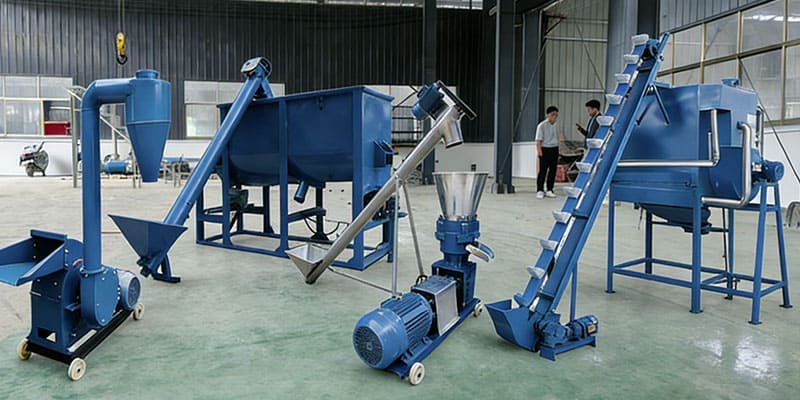
A complete small-scale feed production line uses a hammer mill for grinding, a mixer for blending, a flat die pellet mill for forming pellets, and a cooling method. This system gives you full control over feed quality and cost.
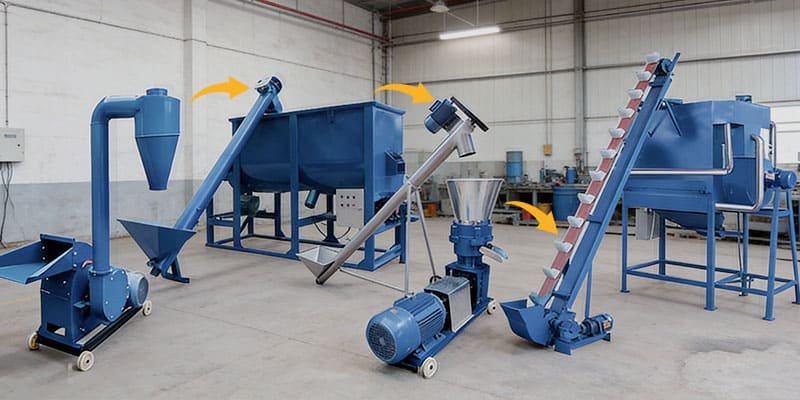
Many farm owners are interested in producing their own feed but hesitate, often assuming the required machinery is too complex or expensive. However, a modern small-scale system is designed specifically for farm use—it's efficient, affordable, and requires minimal space. This guide outlines the essential equipment you need to build a self-sufficient feed production line.
Why Choose a Small Flat Die Pellet Mill?
When researching pelletizing equipment, the high cost and large size of industrial ring die mills can be discouraging. This often creates the impression that all pellet machinery is out of reach for smaller operations.
The flat die pellet mill is the ideal choice for small-scale production because it offers a low initial investment, a compact footprint, and the versatility to process a wide variety of farm-grown ingredients effectively.
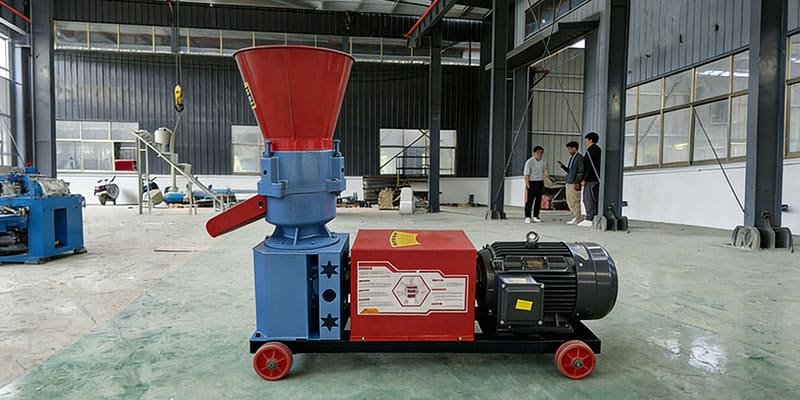
For farm-level feed production, the flat die pellet mill is a more practical and economical solution than its industrial counterpart, the ring die mill. Its primary advantages are directly aligned with the needs of a small to medium-sized farm. The lower cost makes it an accessible investment with a faster return. Its compact design allows it to be installed in an existing barn or workshop without requiring major construction. Furthermore, its design is inherently more flexible, efficiently handling the diverse and sometimes inconsistent raw materials—like corn, soybean meal, and high-fiber forages—that are common in on-farm production. This adaptability is crucial for creating custom feed rations based on available ingredients.
Essential Equipment for a Mini Feed Pelletizing Setup
To achieve consistent, high-quality pellets, a single machine is not enough. A complete system is necessary to ensure each stage of the process, from raw material to finished product, is handled correctly.
An effective mini feed pelletizing setup requires four key machines: a hammer mill for grinding, a feed mixer for uniform blending, the flat die pellet mill to form the pellets, and a cooling system to ensure durability.
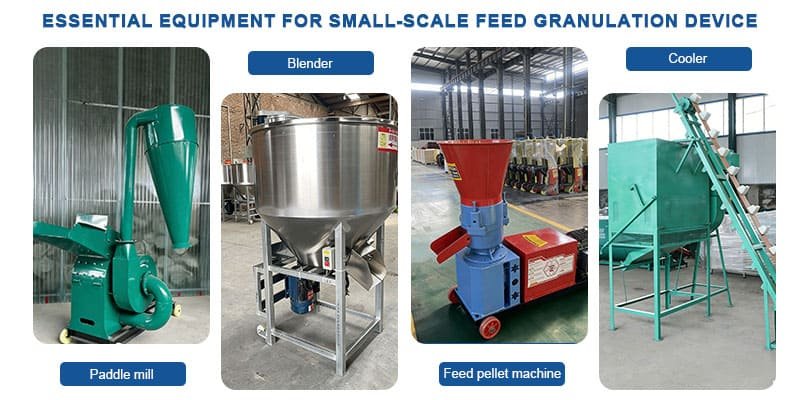
A professional-quality pellet is the result of a controlled process. Each piece of equipment below plays a vital role in achieving the desired density, durability, and nutritional consistency.
- Small Hammer Mill (The Pre-Treatment): This machine handles the initial grinding of raw grains into a fine, consistent powder. This step is critical as it increases the material's surface area, allowing for proper binding under pressure.
- Feed Mixer (Uniform Nutrition): Before pelleting, the ground ingredients must be thoroughly blended with vitamins, minerals, and other supplements. A mixer ensures these components are distributed evenly, so every pellet offers a complete nutritional profile.
- The Flat Die Pellet Machine (The Core): This is the central machine in the process. It uses a system of rollers to apply intense pressure, forcing the mixed powder through a hardened steel die to create dense, uniform pellets.
- Cooling and Storage: Pellets exit the machine hot and slightly moist. They must be cooled to reduce temperature and moisture content, which hardens them and ensures they are stable for storage without risk of mold. For small batches, air-cooling on a clean surface is sufficient.
2026 Buying Pellet Mill Guide: Electric, Diesel, or PTO?
Choosing the right power source is a crucial decision that depends entirely on your farm's layout and available resources. An incorrect choice can limit the machine's usability and efficiency.
Select an electric motor for indoor use with reliable power, a diesel engine for maximum portability and off-grid operation, or a PTO model to utilize the power of your existing tractor.
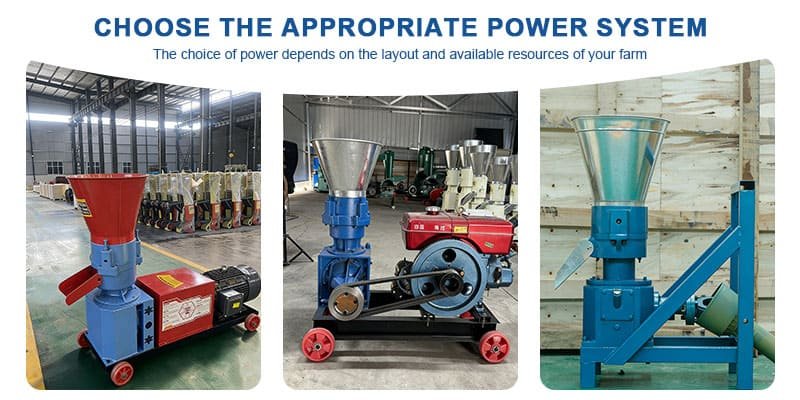
Modern farm-use pellet machines offer excellent flexibility. Evaluate your operational needs to determine the best fit.
- Electric Motor: This is the standard for stationary, indoor operation. It is quiet, reliable, and easy to maintain, making it ideal for a dedicated space in a workshop or barn with adequate electrical service.
- Diesel Engine: For farms needing mobility or operating in areas without reliable electricity, a diesel-powered model is the best solution. It allows you to produce feed anywhere on your property, offering complete independence from the power grid.
- PTO (Power Take-Off): This is a highly cost-effective and powerful option for farmers who already own a tractor. The machine draws power directly from the tractor's engine, providing robust performance without the cost of a separate motor.
How to Optimize Your Feed Quality
Producing pellets is one thing; producing high-quality pellets that improve animal performance is another. Success lies in controlling key variables throughout the production process for a better Feed Conversion Ratio (FCR).
Optimize feed quality by maintaining a raw material moisture content of 12-15%, selecting the correct die hole diameter for your target animal, and using a machine with high-quality alloy steel components for consistency.
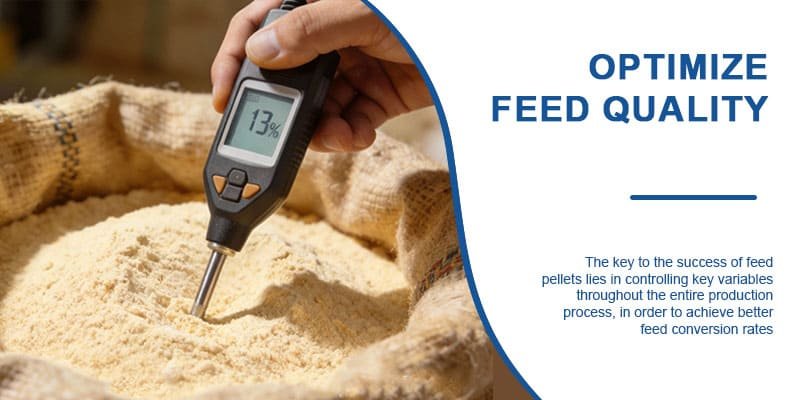
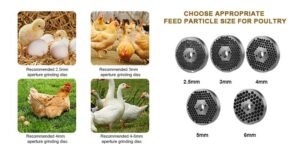
Achieving optimal feed quality requires attention to technical details. First, moisture control is critical. The ideal moisture content for most feed mash is between 12% and 15%. This ensures proper lubrication and binding within the die. Second, the die itself must be chosen carefully. The diameter of the die holes determines the final pellet size. For example, a 2.5mm or 3mm die is suitable for starter feed for chicks, while a 4mm to 6mm die is better for pigs or adult poultry. To learn more about matching the die to the animal, refer to our detailed [Die Selection Guide]. Finally, the durability of your machine's wear parts, like the alloy steel die and rollers, directly impacts the consistency of your output and reduces long-term operational costs.
FAQ: Common Questions
Q1: Is a small pellet machine difficult to maintain? A: No, flat die machines are designed for straightforward maintenance. The primary tasks involve regular lubrication of the roller bearings and ensuring the die is kept clean after use.
Q2: Can I make wood pellets with a feed pellet machine? A: This is not recommended. Wood biomass requires significantly higher compression forces and different die specifications. Using a feed pellet machine for wood can cause premature wear or damage to the components.
Still not sure which die size fits your recipe? Check our Free Pelletizing Guide below.
Conclusion
Investing in the right equipment to manufacture pellets—a hammer mill, mixer, and flat die mill—is a strategic move. This system provides complete control over your feed's quality, ingredients, and cost.
-300x150.jpg)